Are we now voting on mental health?

Here in Florida, we have a process in which citizens can gather enough signatures and put an initiative on the ballot to alter the state constitution.

I vote no, even if in principle the idea seems good, because I don’t think that a majority vote is the way to treat a constitution. I would vote no, even if the amendment proposed to preserve, in perpetuity, the tax-exempt status of dark chocolate due to its obvious necessity to life. The whole idea of a constitution is that it sets forth basic principles: natural law, the essentials. All other laws and rules get held up to it to see if they fit within the boundaries of that constitution.  

In the upcoming election, Floridians will be asked to vote on a proposed amendment that would legalize non-medical marijuana for adults age 21 and over in Florida.  My libertarian side doesn’t much care what people do until it impacts other people. People who mess up their brains with drugs often seem to feel entitled to drive; ultimately, they demand their healthcare be paid for by other people; they clutter up emergency rooms, and do all sorts of other things that do impact others, making drug use a social, not a merely personal, issue.

Professionally, this deserves a resounding “no.” Not just because popular votes are not the way to treat a constitution; but because there is so much information not being openly and clearly presented on this.

To begin with, it is fairly laughable that there is so much so-called medical use of marijuana, when the research is sketchy for even the handful of possibly legitimate uses.  Anxiety? Insomnia? Marijuana is practically a recipe for anxiety, and in fact, can lead to very severe anxiety, especially among younger users.

Secondly, most people have been effectively shielded from information on the impact of marijuana on mental health, physical health, and crime. Why? Whose interest is served by hiding the number of ER visits for psychosis, panic, and/or hideously violent vomiting due to marijuana or other forms of THC use? Whose interest is served when the impact of THC in criminal activities is hidden? There is evidence that use of the modern, stronger forms of marijuana is leading to substantial increases in psychosis, self-destructive behavior and violence against others. Most people seem quite unaware of this. Did you know that the emergency room visits due to marijuana use – psychosis, panic and/or “scromiting” (screaming and vomiting) increased 53 to 400% in the first few years, from city to city? Or that even in Europe, the rate of marijuana psychosis slipping into schizophrenia has increased between 300 and 400% in the past twenty years?  In Colorado, a tragic experiment in progress on pot legalization, emergency room visits related to marijuana use increased 500% in the 5 years post-legalization, with severe psychiatric symptoms including psychosis and panic attacks. Then there is the pain and terrifying projectile vomiting typical of cannabinoid hyperemesis syndrome.

Critically, marijuana is not safe. It is prescribed medically (despite the evidence being rather variable and inconclusive) with a shrug: “well, the possibility of benefits outweighs the risks.” Fair enough; no reasonable person is worried about someone who needs appetite support or help with pain while in treatment for cancer or AIDS having long-term effects from marijuana; the possibility of benefit outweighs the risks.

That doesn’t make it safe. In 2021, about one-third of high school seniors were using marijuana in some form. We ought to be very worried about the effects on teenagers and young adults, whose brains are still in development and whom, evidence shows, will have long-term impacts years after they have stopped using marijuana. That, of course, assumes that they stop. About 17% – 1 in 6 – of people who start using marijuana in their teens will become addicted. The addiction rate is about 9% for adults, and that is old data from 2015, and thus trails the upticks in use and in potency.

The increased risks, especially for young males, for unremitting anxiety, psychosis, and a lingering apathy and lack of initiative ought not be brushed off or laughed off with stories of the late 1960s. Then, the available marijuana caused hallucinations for many people and was far less potent that modern varieties. In the past 40 years or so, the potency has increased about 4-fold.  For adolescents, the rate of suicidal ideation triples in those with cannabis use disorder; the rate of depression nearly triples; truancy, fighting, poor concentration all increase markedly with regular cannabis use.

Interestingly, we are urged to accept psychiatry when it comes to destigmatizing mental disorders and treatment, but this enthusiasm for psychiatric expertise melts away when it comes to legalizing weed in all its forms. The American Psychiatric Association still officially opposes the use of marijuana, noting it is not research-supported for psychiatric diagnoses and bears substantial risks for psychiatric side effects. The experts are discounted on this one thing. What could possibly drive that behavior?

Stepping back and gazing at these points – and I am sure there are others – I ponder why there is so much interest in promoting this particular amendment.  Is it because, as the old Judas Priest song goes, “Out there is a fortune, waiting to be had”? Is it really the case that so many people who are enthusiastic about bossy rules about the size of people’s American flags, house colors or the time people roll out their trash cans are libertarian on this one thing? How will they feel when it is their son or daughter who slips away into depression, relentless anxiety or psychosis?

The argument is made that legal marijuana will be pure – not laced with fentanyl or other deadly substances. Assuming this is the case, and that there arises no underground market to avoid taxes – moonshiners versus revenuers, remember? – the question remains as to whether the risk is worth it in terms of psychiatric and gastric impacts.

Who will pretend, later, to not have known how dangerous what will no doubt be called something like “Big Weed” really was, and rush to sue because of brain damage, the loss of loved ones to suicide or cancer? What about those whose death is due to initiating violence while “high” and being killed by someone in self-defense? What class action suits will emerge to right the wrongs of mass hospitalizations for psychosis and its long-term medical management? Will it in fact be the same ruse of not-knowing used against tobacco, despite its having been referred to as “coffin nails” even in the 1800s? And beyond these major effects, what about the many lives and talents wasted by indifference and ennui as the years-long lingering apathy steals young adulthood and early middle age?

What would make sense:  this proposition as a possible law, not as an amendment, with publicly available hearings and testimonies from all sides: those incarcerated for years for petty possession charges and those whose loved ones spiraled into psychosis and suicide.  Let’s hear sworn testimony and evidence from medical experts on both sides and statisticians who can break down the data on crime and medical impacts.  Then, having heard the information, we can, through the legislative process, pass a law that adheres to the principles of the state constitution and best suits the facts of the situation.
The Best Years

When I was in high school, many adults told me I ought to really enjoy those years because they were “the best years of [my] life.”

Well, for me, high school itself was not, overall, such a great time, and having a bunch of grownups assert that it would turn out to be so was not encouraging at all. From where I am now, I feel sorry for a lot of those adults, because if that was their experience, they must have had pretty miserable adult lives.

Very often, we’ve adopted the idea that some certain time comprises the “best years of life.”  Consider the people who postpone marriage and family because they believe that their 20’s are “the best years of life” and they want to be “free” to travel/build a career/be self-indulgent/whatever.  Some of them will regret later that they did not make different choices (ask any therapist, priest, minister or rabbi).

On the other hand, some of us have our lives unfold in a different order: responsibility precedes higher education, and career-building comes largely after active-duty parenting. What, in the long haul, did I “miss out” on? Not a thing, and this was clear all along the way because I refused to take the bait on some certain time being “the best years” as if it were a prize category.

How about framing things up this way: each period of life is the “best” for what it is meant to be. As it says in Ecclesiastes, 3:11, “He has made everything beautiful in His time.”  And in its time, too.  There are some things that our 20s tend to be best for; and for some things, our 40s, 50s, 60s.  Yes, biologically, the 20s are peak time for having babies, and yes, forms of learning that require sheer memorization are best pursued prior to the 40s.  High-level analysis and wisdom, on the other hand, peak later than memorization and keep rolling, usually long after we start fumbling for the reading glasses we put down someplace and then find on our head.

There are different challenges, joys, and heartaches all along the way. Fortunately, our priorities change, or ought to. For God’s sake, who wants to be over 50 and as terrified of other people’s opinions as the typical 15-year-old? 

Are you tempted to feel discouraged? Does it feel as if all doors are shut because some events, some struggles, or perhaps your own regrettable choices, have meant you have lost a chance at the “best years”? Please reconsider. Make a different set of choices or just one different choice today. Then, perhaps, unexpectedly “best” years start today. You probably won’t be able to tell right away. Usually, we only see this when there’s enough distance to look back at today, tomorrow and the next day.

Why am I still here?

“Why am I still here?”

I hear that a lot. Perhaps you do, too.  The veteran who survived a firefight that took his friends; the person who woke up in the hospital to find they were the only survivor of a car crash that took their family; a survivor of a natural disaster that took many lives.  Many adults, perhaps most, have had such an existential episode. I’ve been in car accidents that could have killed me; survived acts of violence that could just as easily have tipped over into lethality, lived through serious illness. None of those are particularly unusual, and only mentioned to underscore the point.

“What do I live for now? What ought I be doing?”

That’s a tough one, yet it is the question every believer is tasked with as the subtext of life every day.  There is some chatter among the media that presuming that one’s survival is in God’s hands is some sort of unusual perspective. It is not my intention to speculate on any particular person’s interpretation of what that means. For those who find it perplexing, I hope to offer at least this Christian’s perspective. God never wants evil; it takes our free will for that to happen. Many of us wrestle with trying to figure out why God allows bad things to happen. Allowing something is not the same as wanting something, that’s for sure; every parent has to learn that lesson, fairly early on.

You may want your toddler to go to sleep. You may want that very, very, very eyes-burning-with-exhaustion much. But you have to allow the reality that the toddler will keep on singing songs, or whining, or coming out to complain. (If you do anything to “make” a child sleep, whatever adult is aware of it is required to report that to child protective services). C.S. Lewis does a much better job of explaining this particular point.  God, of course, chooses to allow or not. I’m not going to understand why because I am not God. God creates everything and I can do not a thing, even catch a breath, unless God wills it.

Our job is to figure out what God wants from us in each emerging situation, whether the situation itself was His will or not. For believers, every breath is a gift; there is no guarantee of another. Pondering what we are to do with these circumstances and assuming God has a preference in terms of our choice of action is not a big stretch.

So, for a Christian, God did not want Corey Comperatore to die in gunfire, protecting his family. It was not God’s will for the gunman to shoot. Mr. Comperatore clearly discerned his purpose was to protect at all costs. He had, apparently, discerned this over and over until his reflex towards self-sacrifice looked “automatic.” That seems to be a sign that his formation into the nature of Jesus Christ, the nature of complete self-giving, was something he had truly embraced.

And now, everyone left behind must discern what God asks of them in this new, tragic circumstance. Over the course of years and months, his family will each have to discern how to restructure life and find a different path forward. Friends and neighbors will need to discern, ongoing, how to provide friendship and support when the months pass and the spotlight of media attention fades.

The question doesn’t necessitate a tragedy, such as an accident, tornado or an attempted assassination. It is a perennial question: every person mourning infertility, every widow, widower, and bereaved parent.  Adolescents are supposed to wrestle with it; the elderly are, too. And all along the way, it is the question every thinking person ponders when transitioning to a new stage of life. We ask it at those times, too, that are both joyful and sad; a child grows up and successfully leaves the nest: mission accomplished; but what is my purpose now? Retirement comes; well, then what? What is your purpose now, beyond a vague sense of perpetual recess?

Being Christian means striving to be conformed to the nature of Jesus Christ. That means seeking not just to avoid being “bad” but attempting to do God’s will in every situation.  Is it “bad” to spend an entire lazy weekend afternoon with a pot of tea, a good book and a handful of chocolate? Especially on the Sabbath? No, lemon ginger tea and Lady Gregory’s book of Irish folklore, edited by W.B. Yeats, don’t make the list of “do-nots,” but the entire afternoon? When a friend needs a caring ear or a letter? When a nagging thought keeps intruding with that starts with, “I really need to reach out to…” maybe the “not a bad thing” needs to step aside and yield to the “better thing,” a “because” for the moment.

And, when you’re wrestling with the big questions of life, the little “becauses” become a path through the dark places.

I Just Needed to Vent about That

Back in my running days, I once reached mile 18 in a marathon when I noticed the blood coming through my running shoes. “Didn’t you notice?” I was asked. I said, no, not really, as I changed socks and went back to the run. You might think I have the pain tolerance of a superhuman, but that’s not the case at all. First twinge and I am on the phone with my dentist’s office, where everyone knows me by first name. Discomfort comes in categories and for me, blisters, in the context of a marathon, were in one category and dental pain in an entirely different one.

This issue of categories of discomfort intersects with the variety of responses to life’s pains and problems.

I just need to vent.”

“Sorry – I’m just going to vent.”

“Look, I don’t need any advice – I just need to sort of verbal vomit this stuff.”

Lots of ways to say it, but the short form is “vent.” As in, blow off steam, let off a bit of pressure. It sounds like a good idea, right? I mean, holding all that in can’t be good for us.

And neither, as it happens, is merely venting for the sake of venting. With a caveat.

That caveat is the situation in which someone really is in a painfully difficult situation in which there are no tenable options except to endure it. Consider, for example, the pain of the spouse who is caregiver to their dying husband or wife. They have already accepted the help of Hospice or palliative care; friends and family have stepped up. But the loneliness, the grief, the pain and exhaustion still are there. This is a person who can benefit from some venting to a compassionate listener who isn’t going to give them silly advice or trite encouragement.

Then there are all the rest of us.

Venting, in small doses, here and there, might be helpful. It stops being helpful when it becomes some sort of permanent coping mechanism, perhaps even seemingly a part of the personality.  Consider the coworkers who deal with unhappy work situations by commiserating over drinks or takeout week after week but never find the time to look for something better. They keep the level of discomfort just within tolerable levels by venting and indulging in bonding-in-misery.  Perhaps it’s the person for whom griping is a personality trait: anything is fair game. They confuse unmet whims with discomfort. Real discomfort has a very useful purpose.

Discomfort lets you know there’s a problem. Sometimes the problem is serious, and sometime it isn’t. Elite athletes, including very dedicated amateurs, react to pain differently from the non-elites.  An elite athlete will disregard non-critical discomfort and stop on a dime if the wrong sort of twinge – something a non-athlete might not even notice – suddenly starts. That’s why a marathoner will be surprised at their bloody socks at the end of a race but would have stopped a workout if there was a fleeting not-right sensation in the back of the knee.

If you’re a “venter,” maybe it’s worth reflecting on if you are habitually venting – like a beginning exerciser who thinks every stitch in their side is an emergency. Or are you more like a semi-regular exerciser, who can tell the difference between serious and nonserious discomfort, but would like an excuse to hit the snooze button and go back to sleep- so you vent instead of taking constructive action? Perhaps you keep venting in its place: very occasionally, but mostly for the times when options are very limited.

Please share about the day with your loved ones, including the joys and frustrations. Just realize that if the same frustrations keep being aired, that something in the situation needs reflection and change – whether it’s the circumstances or the approach to them. After all, in a year, or two, or five, do you want to be having the same conversation about the same problem?

Mom Wisdom: See, I wouldn’t like that

My mom has much wisdom, and it is often compressed into a succinct statement. One such statement is the beautifully versatile, “See, I wouldn’t like that.”

It is a thoughtful, personally disclosing and completely nonjudgmental response to all sorts of statements and behaviors. 

A distant relative has gotten an uncomfortable looking piercing. See, I wouldn’t like that, having a hole in my lip. But it’s not my lip.

Another family member is an avid hunter, while she is a vegetarian. See, I wouldn’t like that. But I’m sure it’s good to save money on food and of course the poor animal had at least a better quality of life while it lasted than those poor animals trapped in commercial stalls.

An elderly family member is planning a hiking and camping trip in the mountains. Well, good for her, but I wouldn’t like that. I’m sure she’ll have fun.

She will not pretend to agree with an opinion to keep the peace; she will not be abrasive or confrontational about it, either. She will not pretend that she, too, would want to skydive or travel someplace with large insects or otherwise engage in activities that she finds unappealing. She will listen, ask lots of questions, show genuine interest in the topic, seek to understand the other person’s enthusiasm, be encouraging and may also remark, well, see, I wouldn’t like that.

We have, to some extent, adopted this expression. Even when making an observation about something, such whether to go to the local First-Friday concert when the music is not a genre we enjoy, no criticism is necessary, just the agreement that lots of people will really enjoy it but, see, we wouldn’t like that.

I wonder what changes would ripple out if more people, instead of criticizing others for thinking or doing differently, the first stance was that respectful curiosity followed by a personal reflection that has nothing to do with whether the other party is “right” or “wrong.”  The alternative is a world where people fight or even cut one another out of their lives for matters that are more personal opinions than principles and too often, too little effort is made to find some common ground. And, see, I wouldn’t like that.

Why Ask Me That? Third in a series on questions in the therapy room

Someone who is struggling with anxiety just wants to feel better. It’s understandable; anxiety feels awful. The physical symptoms, so often hovering just below full-blown fight-or-flight; a mind that won’t rest, a brain that hops from topic to topic like a rabbit in a vegetable garden. Add to this the fear that so many people have when they come to therapy:  will the therapist tell me I’m crazy?

No; no, I won’t tell you that, but I am probably going to annoy you with a lot of questions that may seem to be irrelevant to your suffering. My paperwork asks about your history, decade by decade; your losses; job satisfaction; health issues; your alcohol and drug use; your prescribed medications; your exercise and sleep patterns. I ask about screen time, social memberships, supportive relationships. I ask a lot of questions, and I can tell who thinks those questions are irrelevant by who leaves them unanswered, handing me incomplete paperwork and acting surprised when I follow up on the many blank places.

All these questions are important, and here’s a short discussion on just a few aspects and the explanation.

Your sleep patterns, and any difficulties, can both contribute to, and be worsened by, anxiety, stress and depression. If you need more, or better sleep (and most people do), figuring some ways to improve your quality and quantity of sleep can help across many categories of your life: focus, memory, energy, stress level, and mood. When these improve, relationships can often improve, as you might expect when you can pay attention and be less cranky.

If you have major health conditions that are not properly managed, these may contribute to problems with sleep, anxiety, or mood. For example, poorly managed diabetes, besides being physically very dangerous, impacts focus and mood. I would refer you to your physician to see if there are problems that require medical attention.

Social isolation is a recipe for loneliness and depression. Social media use tends to make this worse – something that seems weirdly contradictory. Lonely people eventually withdraw, and this creates more loneliness, isolation and possibly anxiety and depression. We need to explore ways to enter back into activities with others.  From my guidance counselor days: children who are isolated suffer. If you ask a child if s/he has friends, and then ask him/her to name those friends, and there is a flash of hesitation, you know you are dealing with a child suffering social isolation. Just so, adults who cannot identify some supportive relationships and what is good about those relationships is an adult who is emotionally isolated.

I ask questions that make sense to me; if they don’t make sense to you, please ask why I’m asking. Thanks!

Detour Ahead. There. And there.

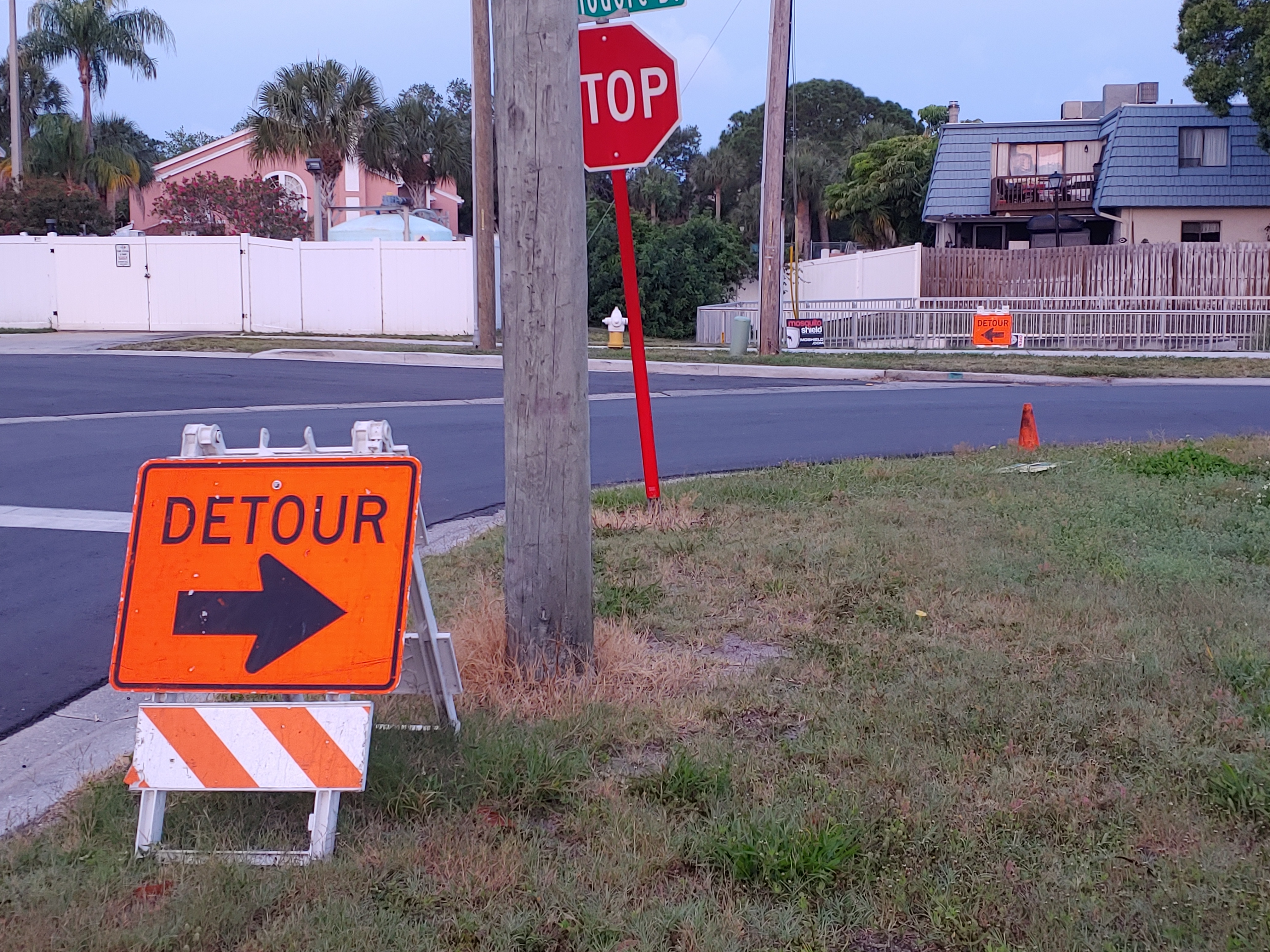
Look carefully. Yep, that’s a detour sign, pointing to the right at the T-intersection. And yes, across the street is another detour sign, pointing left. There are, as it happens, only two ways to choose here – right or left. Both appear to be detours. To where? From where?

A quarter-mile away, the road crews who neglected to pack up these signs (months have passed) also left behind a Detour sign with an arrow pointed up, as in, go straight ahead. That particular sign has been moved back and forth, one day pointed north, then south, and, most recently, either whimsically or horribly, as if the detour was to crash through someone’s side fence into their backyard.

Pity the unsuspecting rideshare driver who has to figure all this out. Eventually, there will be road work in our area again and we’ll all stupidly ignore the first detour signs, because we’ve learned to regard orange signs with arrows as signifying nothing.

There you go: life with crazy detours and places where there seems to be no right answer. At least, there seems to be no easy answer. It can be hard to know if a detour indicates something to be avoided or a relic or even a ruse.

Anyone new to the neighborhood would be stymied by the mixed messages, while the people who know the origin of the dueling detours shrug and ignore them – or, in some cases, get annoyed and move signs across the street.  There’s a clue: when a detour arises, ask questions; see how other people are responding to the apparent detour, and why.  On occasion, I see, in stores, the relics of the social distancing recommendations of 2020, those half-peeled away stickers on terrazzo floors. Like the road-sign-weary denizens of my area, shoppers ignore signs that used to be treated as if they’d come down from Mount Sinai.

There are detours that make sense, like when there’s a big hole in the road. No doubt you’ve gotten your share of detour signs from life. I’ve had mine. Some have kept me from disaster, and some turned out to be less about danger and more about someone else’s fears or agendas.  I’ve heard about many – and about so many people who figured out which detours were legitimate, and which were either relics or ruses.

Wishing you good adventures, and the wisdom to know relics from ruses, as well as to never be the person who puts up fake detour signs for others.

To Ink or Not to Ink

To ink or not to ink: that is the question.

Not my question, but a lot of people debate this. Perhaps they are considering the latest news: the research showing a significant increase in the risk of blood cancers with just one tattoo. That seems worth attention.

Sometimes, people planning a tattoo want to talk about it, the image and the expected arguments from friends or family. We might discuss the option of wearing a piece of jewelry with the same design for a year straight – no exceptions – or the benefit of a trial run with temporary tattoos for a few months.  Perhaps pulling out a particularly unflattering photo, with a hairstyle and clothing you thought looked great at the time, and facing it every day for a year or so would provide a tap to the brakes. Most often in these conversations, I simply listen, ask a lot of questions, and offer my personal explanation as to “why not.” There are three significant reasons.

On my phone, I have a photo of memorial bricks that rest in Europe, with the names and deportation dates of family members who died in Auschwitz in 1944.  They would have been tattooed by the Nazis, each with a unique number, for the obsessive record-keeping for which the Third Reich was known. Out of respect to their memories, no ink.

I can’t think of any sort of decoration I wouldn’t tire of, sooner, probably, rather than later. A look at my hair and fashion choices in old photos makes that spectacularly clear. Due to the likelihood that I will someday find my décor of the day regrettable, no ink.

Finally, the two most significant factors in my life, my faith and my marriage, are too important to me for tattoos. Both deserve a deliberate, mindful choice – every day, every moment. The crucifix I wear is by choice, never mindlessly or without reverence for its meaning and the demand placed upon me, however poorly I may live out that demand. The wedding ring is deliberate, a clear statement of, I love you, I choose you, each day. Never indifferent, never nonchalant: to wear these things is a daily action verb.

Now, those reasons may make no sense to you. Maybe they seem silly or irrelevant to your situation. Perhaps they do; but perhaps they are worth a conversation with someone as you, or they, make decisions about permanent records of this particular spot in place and time.  

Social Contagion

(This post mentions eating disorders, self-harm, substance abuse and suicide. Please reach out to your local emergency services if you or someone you know is struggling with any of these!)

When I was in 9th grade, I unwillingly, and briefly, attended our parish’s very small Catholic Youth Organization meetings (CYO.  The group comprised mostly boys, all altar servers, who played ping pong and pool with our associate pastor, a well-meaning middle-aged priest from Poland. The only other girls were the type of enmeshed best friends that are normal at that stage of life. Their shared passion was Bay City Rollers. They put together, in that era of typewriters with ribbons and no internet, a monthly fan newsletter with some success.  Life would have been oh, so easy, if only I could have mustered enthusiasm for the boys from Edinburgh.  I tried. But, despite the social costs, a Dylan fan I remained.

Go ahead, laugh. But you have faced the challenge of social contagion, too. You may even now be wearing a style of clothing you don’t actually even like. It’s just what’s “in.” As a teenager, you wore the right clothes, or pined after them; you strove for the right hair style. You wore the trendy colors even if they made you look ill, and were anxious for the approval of your peers.  It’s not just kids who follow the crowd; every married person knows that when your spouse’s friend circle comprises mostly divorced people, there may well be trouble ahead.

Over the years, we’ve seen waves of societal concern about the risks of contagion. Were young people teaching each other to cut or burn themselves (1990s), how to purge or starve themselves (ongoing since at least the 90s), how to get a so-called “high” from household items? Could a teen’s suicide lead to copycat attempts?  The answer to all of these is, yes.

Children now are not gifted with preternaturally adult-style brain development. The ability to sound sophisticated by parroting what you’ve read or heard is not the same as an adult brain with a well-developed executive function – something that takes into the early to mid-20s to acquire.  Your kid is not any more resistant to peer pressures of even the subtle type than you were when you were screaming in excitement over a band because all your friends were.  As it happens, they are more vulnerable, because peer pressure can surround them wherever their cell phone works. Odds are, you were free – as soon as you were off the school bus, there was some space for other influences to counterbalance the noise of adolescents striving to show their individuality by being as much like their desired group as possible.

Notice the vagaries of the teenage years: they move from music star to music star, aesthetic nomads in lockstep. No one wears jeans; then they all wear jeans. The games, the accessories, even the car you drive falls under the anxious eye of a child who wants to fit in.  It’s important for all of us to be attuned to the various social pressures to conform, because we want our young people to survive, and thrive, throughout these very turbulent times.

What’s in your backpack?

I was speaking with someone reluctant to make any sort of commitment to a small change in the routine. Things were not going well for my friend, and the future seemed murky. With no clear picture of “where the journey is heading,” taking any first step seemed imprudent, my partner in conversation asserted; it would be better to wait until the “where” is sorted out in life before making a concerted effort in any direction.

One reasonable response to that is, there is no “standing still” in life: attempting to stand still just means things around you will change while you pretend you can hold your position.  See how that works for you standing in the ocean. Maybe that seems trite; the whole “you never step into the same river twice” trope that is, as it happens, absolutely true.

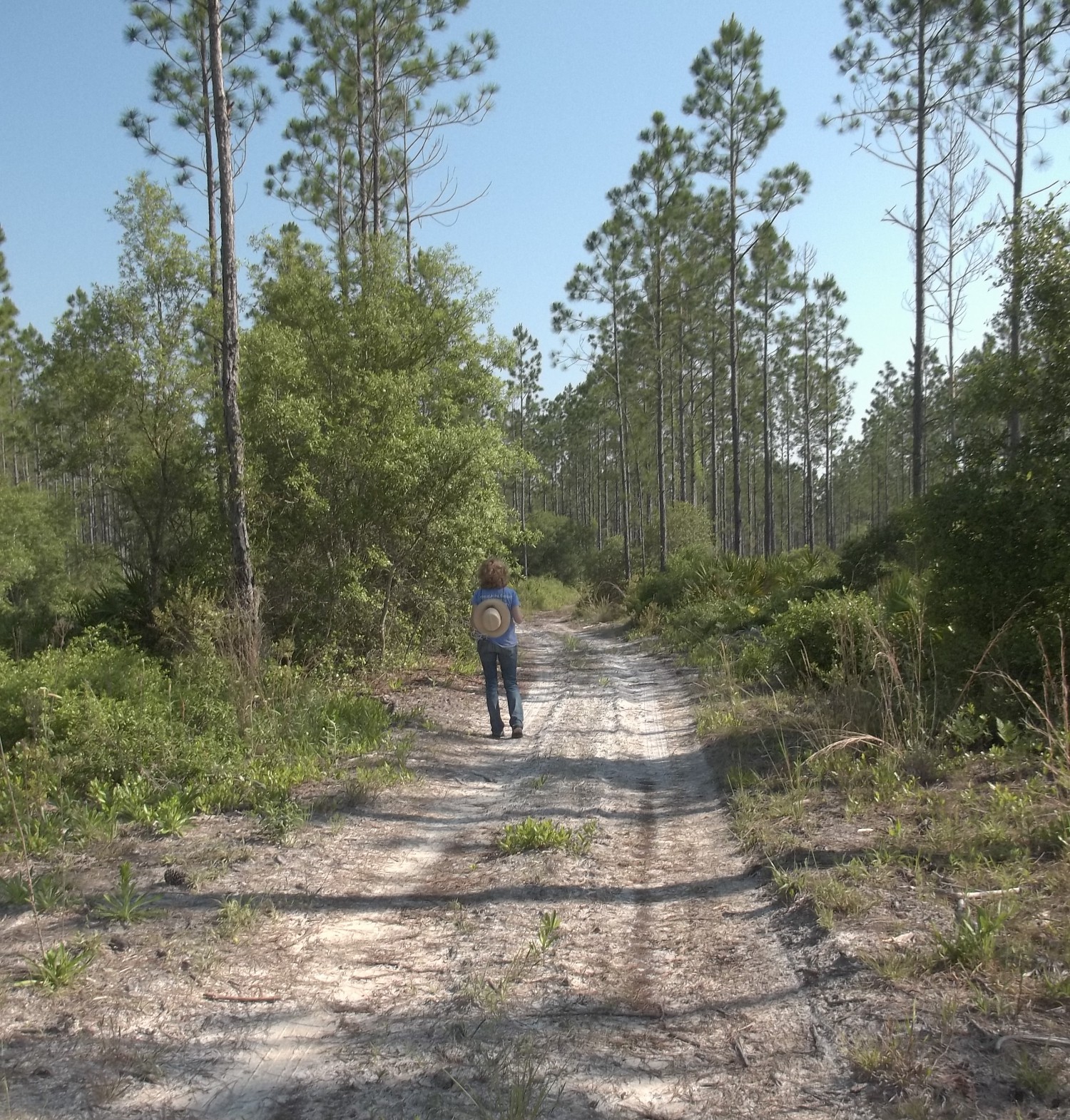
Another way of looking at my friend’s dilemma is this: no matter where my journey is going, some items always go in the backpack. I may not always need the water purification straws, or the sleeping bag rated for freezing weather, but I always need underwear and socks. I always need a spare pair of contact lenses and sunscreen. I always need a small Bible. I always need chocolate and my thyroid medicine. Even without knowing where, or when, I’m going, some things can go into the backpack.

No matter where your life journey is taking you, wouldn’t it be helpful to have a better quality of sleep? More physical energy?  A firmer sense of what your values are, and why, and what the implications are for daily life? A little less messiness in the closet or refrigerator or your car? Less weird clutter and mysterious crumpled papers in that one drawer? Some better thinking habits, whether it’s taking on a phobia or developing your capacity for focused attention?

Even if you’re feeling really stuck – a lot of pressures, an unhappy job situation, the first year or so into significant grief – perhaps there is one small thing you can do first– something you can “put into the backpack” – without a clear picture of where you hope to be heading. And, as you’re putting those essentials into your pack, perhaps the mystery of the next few steps on the journey will begin to come into focus.

Happy trails –