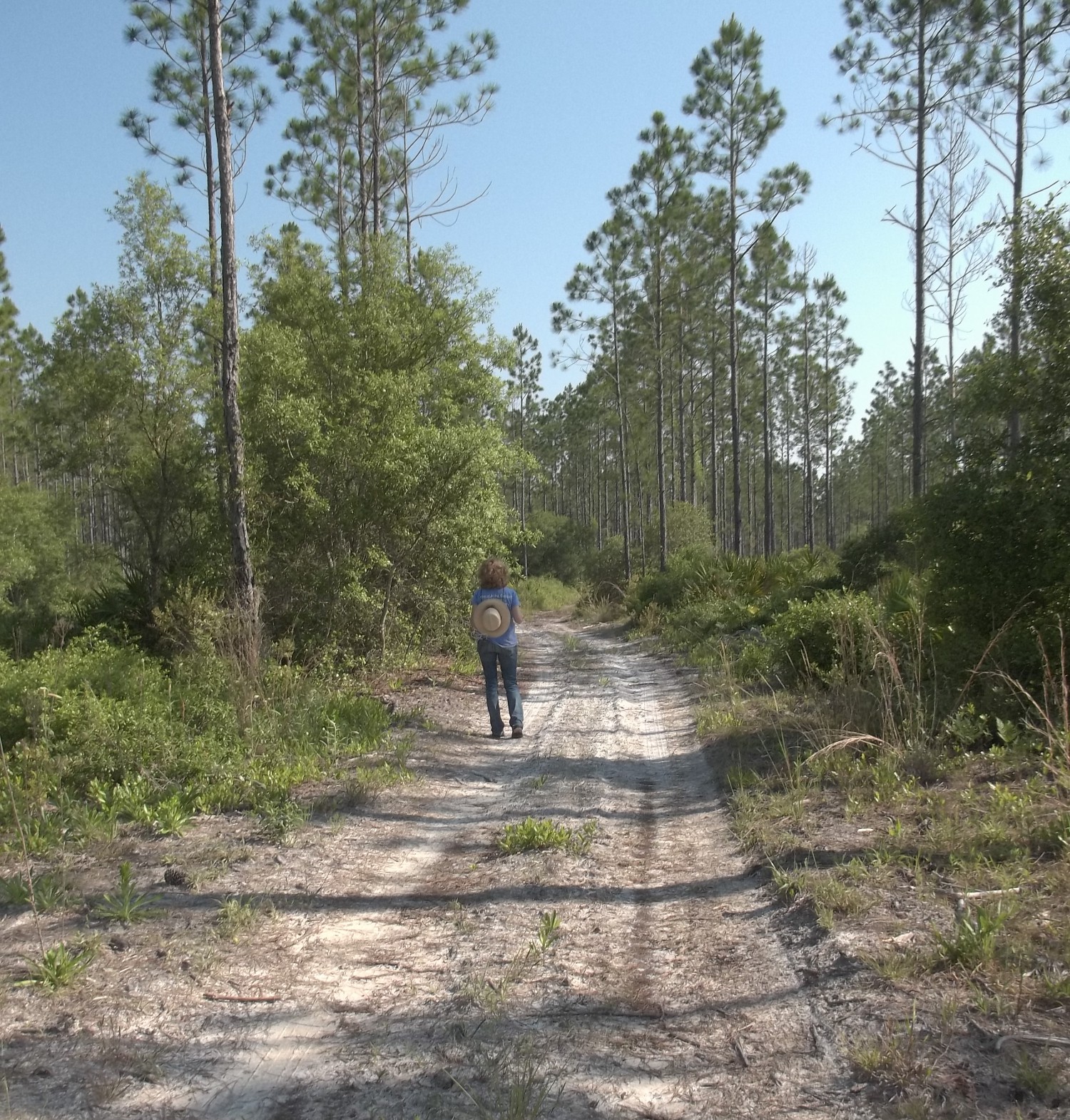
FOMO: Yeah, You Will

And, there is another email from one of my favorite art supply sources, informing me that it’s my last chance – this is it! – the sale ends SOON. Don’t miss out!

A cheerful newsflash:  you’re gonna miss out. A lot. On almost everything. All the time. Me, too. And unlike my art supply source, life doesn’t cycle around the same offer over and over.

Therapists get to spend a lot of time on other people’s lives. We’re expected to be helpful, and that often means saying things people do not wish to hear.

I am grateful to be supervising two gifted therapists-in-training during their post-grad work, and recently in the monthly session when we meet all together, as opposed to their individual meetings, the subject of peacefulness in relationships, in homes, in lifestyle, came up in the context of our work.

One thought I have, not often well-received, is that some people fear peace. I don’t mean “peace” as in no war. I mean personal peacefulness. This peace grows out of daily reflection, perhaps while doing chores or sipping your coffee or taking that daily walk or run. An interior peacefulness can develop. You find that you can let go of always being right, of having to assert your will in situations that really don’t concern you, and the peacefulness of accepting you cannot do, or have, it all.

I believe some people fear that a peaceful existence means missing out. They believe that choosing peace means sitting around passively.

A peaceful heart doesn’t preclude all sorts of exciting activities and situations. It does mean far less bickering, inane power struggles, resentment and bitterness. A peaceful person might love skydiving or white water rafting, but they won’t get into an argument about petty details like who gets to load versus empty the dishwasher.

If someone regularly allows time in silence, they enter reality: that life passes quickly. It is easy, even for a kind person, to rack up lots of regrets for words unspoken or help not offered. They strive to do better. They listen carefully to what old people say about what they do, and do not, regret. If we are lucky, we will get to be that old.

Supposedly, elderly people (and I am now one, or on the cusp) say they regret more of what was undone, rather than what was done. Some people interpret this to mean, do more stuff. But that’s not quite right; I suspect the meaning, for each of us, is quite personal and significant. It’s not a generic recommendation to just do more stuff, faster, and collect experiences. It means that there are things that ought to have been done and were left undone – particular things, things painful to regret. Too much work, not enough attention to loved ones, opportunities missed because of a focus on something superficial. Perhaps, daily quiet allows us to notice those things before chances slip ineluctably into the night. Some doors close, faster than we’d ever expect, and will not reopen.

Have such a seemingly large proportion of people always been so terrified of quiet and anxious about missing out? I don’t know. It probably was harder for our ancestors to avoid quiet. No earbuds to fill your head with other people’s thoughts while you’re planting or reaping, no devices to distract you with endless videos when unpleasant tasks await. No artificial sense of urgency because we will miss out. Our ancestors assumed one could not have/do/experience “it all.” Some might have gone mad trying, but healthier people strove to find meaning and purpose, and therefore happiness, in the normal facets of human life: loving relationships, meaningful pursuits and service to others.

I don’t take time for silence, but I’m listening to educational podcasts, someone argues with me. Yes, I do, too – many of my CEUs are long and complicated lecture series that I take in over many sessions on the stationary bicycle. It’s also important to have quiet, to have times when other people’s words are not crowding out my ability to think, to notice what’s been going on around me, how I think and feel about things, what meaning to derive and what action to take.

Because when it comes to the big things, the few beautiful things I discern belong in the narrow slice of life I am allotted, I have a tremendous fear of missing out.

That’s Smart!

Ah, a new school year, and just past the middle of the year, when New Year’s resolutions can seem long ago and mildly embarrassing, like an old yearbook picture.  It’s a time when we talk to young people about their goals.

A former professor advised us, never take your professional knowledge for granted. When you know something long enough, it might start seeming “obvious,” although it is not. We adults can take for granted the training we received in establishing a goal and then reverse-engineering to the first step, second step, etc.  We’ve known it so long, we forgot. We forgot we ever had to learn it. We take it for granted, like knowing how to sort the laundry or check the air in our tires. You set goals and strategize backwards all the time. Imagine it’s going to be your turn to host Thanksgiving. Without calling it “goal setting,” you have probably already figured out what needs to be done, and approximately when, as well as what you will do about that one family member who never brings what they promised in the family chat. You probably don’t think of planning Thanksgiving dinner in terms of “SMART” goals (specific, measurable, achievable, relevant and time-constrained) or in terms of identifying possible roadblocks and necessary alternative plans. You probably don’t think about it as “goal setting” either, when you decide you’ll clean up the yard next weekend and gather necessary materials such as big plastic bags, so you’re ready to go.

Children, however, have to learn this set of skills. They need coaching. That coaching is not “criticism” but is instead helping them develop the mental skill of breaking down goals into steps to be taken. Sometimes, people think questioning the “how” is criticizing the goal. Developing the “how” is essential to reaching a goal.

If someone working with me says, ‘I want to be able to join friends in walking the New Year’s Day 5K event,’ as a goal they would like to reach, I will be full of questions that are meant to help them. For example, what is their walking routine now? What medical guidance have they had, if any, on how to increase their fitness? How much time do they think they can give to improving their walking distance and stamina? Do they tend to be more consistent when other people are part of the plan, or do they prefer to fly solo? When roadblocks occur (weather, travel, or illness, for example), what tends to help them get back on track? These questions are not critiques, they’re vital information if someone is going to develop a plan that is appropriate that brings them, step by healthy step, towards a goal.

If you have young people in your life, be encouraging and supportive, and help them learn to ask themselves the questions you have about the roadmap to their goals.

Not Spry. Or Spunky. Perhaps Getting Grumpy

I am, apparently, just about at that age where, should some mischief attempt to befall me on a morning walk, perhaps, the news story (as if Seminole ever gets news coverage) would start like this:

“An elderly Seminole woman defended herself against (fill in the blank – loose dog, unusually defensive coyote, a foolish person, etc.).  Dolores Puterbaugh, age (yup), of Seminole, was spry and spunky enough to fight off (problem creature). Etc., etc.”

There is nothing wrong with the word spry. It means agile or nimble, and if we were still applying it across the lifespan, it would be one thing. As it stands, however, we do not call college gymnasts spry.  We also do not describe 40-year-old males who stick up for themselves as “spunky.” These terms have been relegated to the equivalent of “aren’t you cute” and a pat on the head, reserved mostly for men and women of a certain age.

I once read an article in which the author asserted that elderly people often fall or are otherwise injured because they are moving quickly in order to prove they are still spry. This is simultaneously hilarious and offensive. Guess what, whippersnapper; we aren’t thinking about your opinion at all. We’re just doing life. Plenty of young people faceplant on the sidewalk because they hit uneven pavement, or aren’t paying attention. We don’t call their just-seconds-ago pace an attempt to show off their, oh, I don’t know! Let’s call it spryness.

In our performative culture, perhaps the fact that most of us of a certain age really aren’t sitting around, wringing our hands and hoping we can get the approval of younger people doesn’t make sense to the cohorts that crave constant feedback. We value the love of our families and friends, but that’s different than needing approval. I suspect a bit of projection in the notion that seniors are busy putting on a show for young people.

Yet, to be honest, I hope to demonstrate something. I hope I can live out what aging gracefully looks like – what it looks like to do the work of it, and balance determination and accommodations with a spirit of surrender to God’s process here. I would like very much to do this without grumpiness. It will require a lot of grace. But that’s different than showing off agility or trying to impress people with my courage. Or is it spunk?

Critical Boundaries

Are you absolutely sick of hearing about “boundaries”?  Yeah, me, too, sometimes. And yet, here I go.

Many of us are also tired of hearing, “I have a right to my opinion.” Yup, we all do – and we then have the right to experience the consequences of sharing said opinion.

In particular, I’m thinking about the encroaching that parents of adults routinely make in regard to their independent adult children. The adult who is still dependent, perhaps living under a parent’s roof or otherwise supported, forfeits a little in the boundary department when it comes to behavior in the home or financial issues. That is a separate conversation. I’m also not talking about an intervention for a severe problem; addiction and its consequences, for example, can require strong measures.

I’m talking about the comments, questions and subtle criticisms that so many people think are acceptable conversational elements when it comes to their independent adult children.

Adults who are independent and living well, do not need uninvited advice on what they should be doing. “Living well” may not mean “living just like me” or “living as I would in the same circumstances.” Parents who offer such advice think, I love them and I want to help them with my hard-won wisdom.

That is not what their children hear. They hear,

Nothing you do is good enough/right/acceptable, or,

You are incompetent to handle your life.

The adult child is, understandably, offended by such criticism, direct or implied. They may think, they have no idea what life is like now. It’s not like it was then. Why can’t they even ask before they just go firing off advice and telling me what I ought to do?

Fair enough.

If you wouldn’t walk up to a stranger or a neighbor or acquaintance with the same uninvited guidance on how to improve something in their lives, why do this to another adult who happens to be your offspring?

Imagine walking up to some stranger in the produce department and announcing that leggings with such a short top might not be the best look for them since the vacation/surgery/baby and adding a helpful, “I’m just saying,” before wandering off to inspect the fresh spinach.

Or perhaps interrupting a neighbor’s enthusiastic description of a recent vacation with, “Don’t you people ever get tired of cruises/hiking/camping/theme parks/bicycle tours/ etc.?”

Would you walk up to a coworker and pepper them with questions about their preference for leasing over buying motor vehicles, barely listening to their response before piling on another criticism barely veiled in a question?

I have met people, of course, who would freely do all the above – and they are not exactly models for healthy relationships. Yet many other people will speak to their adult children this way, and be indignant when their children push back or just get quiet.

None of this seems worth cutting off parents for; to me, it seems like a hard conversation waiting to be had. I have seen families ruptured by this; the parent who refuses to accept reasonable boundaries, the adult child seemingly eager to take offense. Flags on the field all around, from my perspective. But both have to be willing to accept their slice of responsibility if things are going to get better.

Thanks for reading.

What are they thinking?

What are they thinking, we wonder. It’s a question we toss about in conversation. It frequently comes up with someone is doing something that seems self-destructive, or bizarre, or just unexpected.  For psychotherapists, like myself, a lot of people seem to believe we have a secret insight into what some particular person is thinking. Of course, I don’t. I have theories, sometimes, based on study and thirty-plus years of experience in mental health and sixty-plus years of experience being human, most of that as a voracious reader. But even with all that, I am often stymied and stumped as to what someone is thinking.

I recently dropped off art for a show and met another artist. We were introduced, we shook hands. He is a tall man with big, baseball mitt-sized hands. At least, compared to mine. And my small hands are twisted up and deformed with arthritis, with many joints completely failed, such that my ability to hold a brush or a pastel stick is pretty much a miracle. What was this man, a visual artist whose attention to detail is apparent in his work, thinking when he squeezed my hand as if I were a big man with whom he was about to enter an arm-wrestling contest? I don’t know, but what comes to mind is unkind. So, I try to assure myself it was a moment of oblivion.

We have many people in our neighborhood who walk their dogs and assiduously clean up after them. There is one person (I hope and pray it is only one because it is almost unbearable to think there are more) who very carefully picks up after their dog with proper little dark plastic bags, knots the bags carefully … and then leaves them behind. On the sidewalk, on someone’s driveway and once on the table at the end of our driveway where we had set out the abundant crop from our starfruit tree to give away. What was this person thinking as they left their little present next to the box of starfruit and the big sign announcing, Free Fruit? I hope I never figure it out. My husband, who is better-hearted person than I am, suggested that perhaps it was dark and they thought they were just adding to the trash pile. Hmmm.

What are they thinking when … we all wonder. And I am sure people wonder it about me. Certainly, my little adventures such as hiking up and down canyon walls and white-water rafting when I don’t even know how to swim generate some of that. Then there are the times when I nervously blurt out something stupid, awkward but well-intended when a friend shares difficult news, such as a scary health diagnosis. Being a professional is not a vaccine against that. And perhaps about you, too, sometimes, inspire people to wonder, what were they thinking? Reminding myself of this helps me give a little grace to other people’s weirdness or inconsideration, because I definitely have my moments of being weird, inconsiderate or just plain oblivious.  And at those times, no doubt someone is wondering, “My gosh, what is she thinking…?”

Quitter’s Day Part 2

So … a week since the second Friday of January, what is sometimes called “Quitter’s Day,” for the frequent demise of New Year’s Resolutions. If you’ve given up, or fallen off track, every moment is potentially a new start.

Perhaps you need something a little more manageable: a small step instead of a massive change. Here’s a second suggestion, building on last week’s short post, for a small but potentially life-changing experiment. If you’re not already doing this, get outside in natural light early in the day – as soon after sunrise as you can manage, and, if it’s feasible, again at day’s end. Follow the sunset session with softer lighting indoors; night is not the time for blindingly bright lights. By getting early daylight, end-of-day light and softer, warmer indoor lighting, you will set your brain up for a more natural, sleep-friendly chemistry. With some sources citing 40% of adults having insomnia or other sleep problems, experimenting with the benefits of the right light at the right times could be well worth it!

Quitter’s Day – part 1

On New Year’s Day morning, Fr. Mike noted in his homily to those of us at early Mass that the second Friday in January is known as “Quitter’s Day,” because by then 80% of people would have quit their New Year’s Resolutions.

Perhaps you find yourself in the 80%. If so, may I suggest considering one or more short experiments – trying on a change, for a week or two – and assessing its usefulness for you. These are simple but not easy.

If making such changes were “easy,” we’d be a country overflowing with clear-thinking, peaceful, energetic, well-rested and generous-hearted people. Based on my 15-minute daily ration of news, that seems to not quite be the case.

Starting with the most basic – the marker of life at birth – breathing, which turns out to be something that we so easily can get wrong. If you are in good health and your medical provider doesn’t object, you might experiment with a practice of better breathing. This can be as simple as practicing slow, deep breathing for a few moments three times a day and then as needed when you want to calm yourself.  Breathe comfortably, slowly and deeply, so that the belly expands, rather than a quick, panting breath. Breathing out through the nose can help. “Slow” doesn’t mean make yourself dizzy or lightheaded; it means comfortable and relaxed. This kind of breathing impacts the nervous system in the abdomen and signals the brain to slow down its fight-or-flight, anxious mode.

It’s an experiment that you might try early in the morning, again when you shift gears between day and evening, and at bedtime.  You can find plenty of tutorials online with demos on relaxation breathing. If you have any medical conditions, of course, be sure that this is safe for you by consulting your healthcare provider.

Some people find this very useful as part of changing between activities, such as stopping work for lunch or at day’s end; before a stressful activity such as a presentation or dealing with a negative person; and when preparing for rest at night.

Thanks for reading!

In Autumn, the Truth is Revealed

In autumn, the truth comes out.

And by autumn, I mean any autumn. Autumn the meteorological season before winter; Autumn on the calendar; Autumn in our life span; and Autumn in the liturgical year.

In every case, if you step back far enough, you can see the patterns. The photo op brilliant foliage reveals what was there all along, shaped by experience.  In spite of the sometimes-brutal clarity of autumn, I love this time of year.

Deciduous trees that turn yellow, gold and orange in autumn are not so much changing color as revealing the color that has been resting underneath, hiding under the green of chlorophyll. As the days grow shorter and cooler, chlorophyll production decreases. The leaves have always been golden. The trees have experiences, and these matter, too. Perhaps there has been plenty of rain and the soil is rich, or perhaps a hurricane has blown off so many small branches that the tree suffers malnutrition from a lack of chlorophyll. Then, too, if it is the sort of tree that turns red, its intensity will be impacted by sugars manufactured and stored; more sweetness makes for a more brilliant red.

In October or November, looking back at the resolutions, motto, word or intentions for the new year, the truth is revealed. In March one might kick that can down the road; even in June there is still “plenty of time.” But in autumn, reality comes to visit. We either did, or did not, step up and out into the life we intended to try to make. The combination of who we are (like it or not) and the experiences thrown at us by life bring the outcome we assess in the autumnal review of our intentions for the year. I’ve had the same motto for years now because apparently I’m a slow learner.

In the mirror, in the season of life poets call autumn, we see the person we have been all along, plus our experiences. The smoothness and sameness of youth is gone for those in midlife and later; laughter and tears, pain and care, habits – good and bad – all are revealed. A twenty-five-year-old might hide bad habits, but by forty-five, the entire body shows the pattern and at sixty-five, odds are the mind and spirit are far from what they promised to become before a bad habit became an addiction. On the other hand, there can be an explosion of energy, creativity and spiritual growth at in the autumn of life that startles those who mistook the responsible behaviors of younger years for that person being “boring.” This is when adult children wonder if their parents have gone a bit crazy – taking up new hobbies, traveling, refusing to be properly “old.” No, they were never actually boring, just busy with lifegiving, the drive that Erikson called “generativity,” that leads people to make sacrifices for others, and trees to manufacture food out of sunlight to nourish themselves and the seeds for future trees.

And then the liturgical year winds around, ending about four weeks before Christmas, with the Scripture readings for the last few weeks focused more and more on the last things – our own death, the final judgment, the need to take account of how we are living and make changes in accord with the highest good.  How appropriate that this unveiling of the reality beneath happens in such a pervasive way – that we are offered the chance see ourselves, our year, our years in total, through the same golden lens.

Happy mid-autumn; wishing you all the golden light the season offers.

So … Where Do Those Characters Come From?

Every author hears that question. Probably more so, it’s what people wonder when a therapist starts writing fiction. Friends, family and, possibly, clients and colleagues, wonder whose secrets I have mined to create the characters in my books.

Well, with the first novel in the series out there (Falling Feathers) and a second expected out before year’s end (Never Just One), two more in the queue for 2026 and one in development for 2027, I am happy to take on that question directly.

The fact of it is, unfortunately, that I am tucked into each of these characters.

I am Alex, the put-everyone-else-first person until the stress gets to critical mass and then she must say, No, that’s enough.

I am Joe, who can get so excited about a topic of interest to me, that I can turn any dialogue into an awkward monologue/college lecture.

I am Sandy, who wants to save the world, and probably needs to stop talking about how much better the organic produce is. But it really is better, that’s the thing.

I am Beth, who thinks if I just work a little harder, I can fix any situation.

I am Gloria, who thinks she knows best what everyone else should do. Period.

I am Bob, who smiles and nods at others’ advice and then wanders off to do what I please.

Even the characters I dislike have pieces of me. That’s the way it goes. Writing fiction is like a long and brutal examination of conscience, thrown out there for other people’s enjoyment.

To the extent any reader feels a flash of recognition – well, hello, friend! Looks like we have something in common. I hope you enjoy the books.

Believe that there is more to you

It is a sad and common theme.

A person is struggling: with an addiction, or obsessions and compulsions, or moral injury, or the impact of trauma, and has come to a place where the sense of self has been entirely subsumed by the problem and its pain.

The definition of self becomes “the addiction,” or “the monster who did (whatever has led to moral injury)” or “the mental disorder diagnosis.”

And, of course, as a therapist, I believe it is critical to address mental health troubles with the best of the science we have, with the particular approaches suited, as discerned ongoing, with the specific needs of that client.

But I also believe that a parallel need is extant and urgent: the need for this person, who is suffering, to come back to an awareness of self as a deeply beloved child of God. Not generically loved, like we may say that we “love” some food or activity or type of animal – but particular, personal, and intense.  Women who, like me, have been blessed to give birth will recall that wild wave of emotion that engulfs us when we meet that little person face-to-face after the peculiar intimacy of pregnancy. It makes us irrationally jealous of everyone and anyone; what mother doesn’t remember resenting the nurses and physicians who separated us from the baby long enough to do the general assessments and necessary care? Well, that is a reflection God’s love for each person.

If a person who is suffering is willing to enter into, and do, the hard work of therapy, which will include lifestyle changes and “homework,” and also becomes open to reconsidering his or her existence as a deeply loved person, someone who is more than the addiction, or bad choices, or terrifying memories, or intrusive thoughts and painful compulsions, then true and deep healing can happen.  This is what I would wish for every person struggling with emotional wounds.