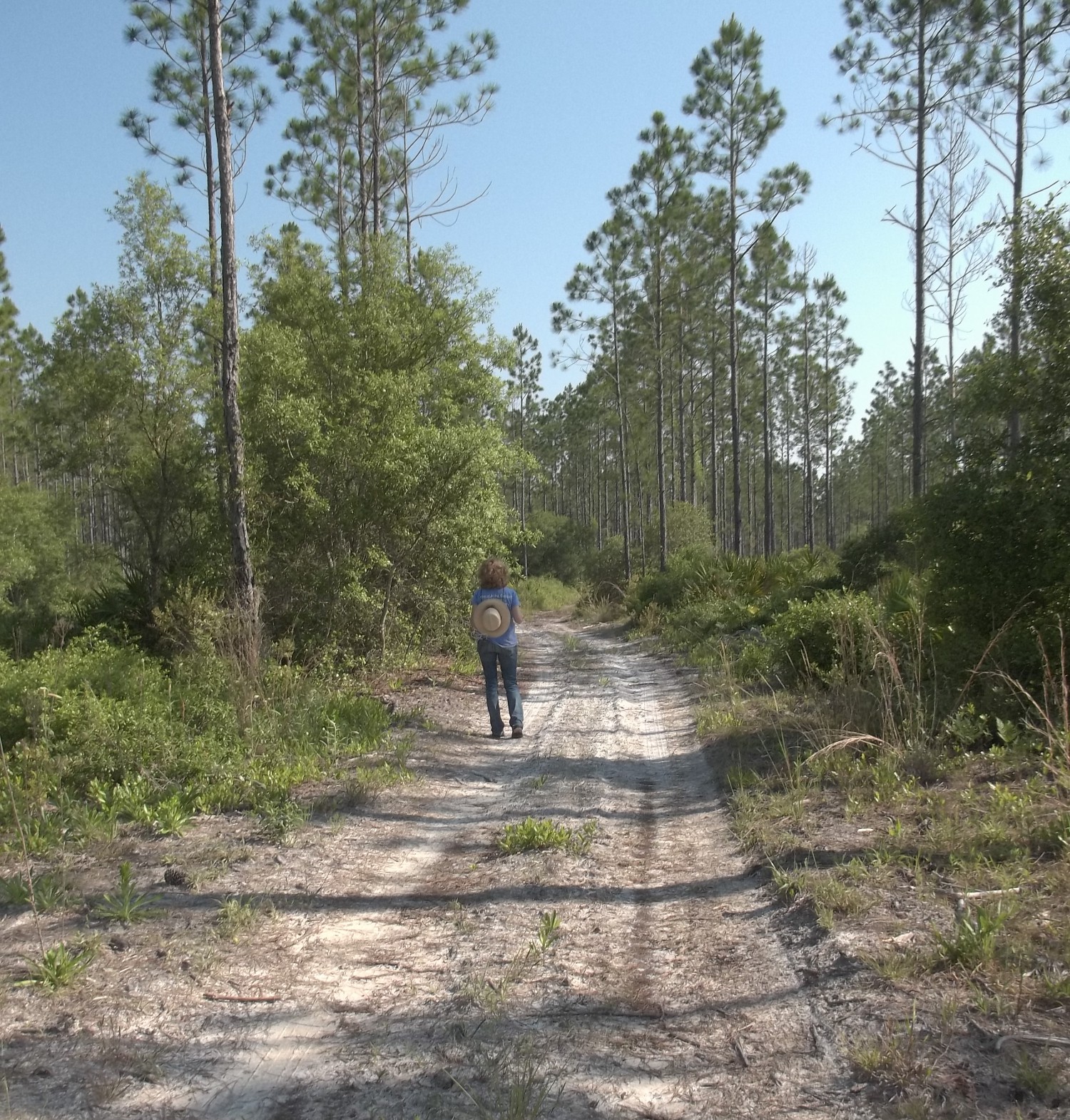
FOMO: Yeah, You Will

And, there is another email from one of my favorite art supply sources, informing me that it’s my last chance – this is it! – the sale ends SOON. Don’t miss out!

A cheerful newsflash:  you’re gonna miss out. A lot. On almost everything. All the time. Me, too. And unlike my art supply source, life doesn’t cycle around the same offer over and over.

Therapists get to spend a lot of time on other people’s lives. We’re expected to be helpful, and that often means saying things people do not wish to hear.

I am grateful to be supervising two gifted therapists-in-training during their post-grad work, and recently in the monthly session when we meet all together, as opposed to their individual meetings, the subject of peacefulness in relationships, in homes, in lifestyle, came up in the context of our work.

One thought I have, not often well-received, is that some people fear peace. I don’t mean “peace” as in no war. I mean personal peacefulness. This peace grows out of daily reflection, perhaps while doing chores or sipping your coffee or taking that daily walk or run. An interior peacefulness can develop. You find that you can let go of always being right, of having to assert your will in situations that really don’t concern you, and the peacefulness of accepting you cannot do, or have, it all.

I believe some people fear that a peaceful existence means missing out. They believe that choosing peace means sitting around passively.

A peaceful heart doesn’t preclude all sorts of exciting activities and situations. It does mean far less bickering, inane power struggles, resentment and bitterness. A peaceful person might love skydiving or white water rafting, but they won’t get into an argument about petty details like who gets to load versus empty the dishwasher.

If someone regularly allows time in silence, they enter reality: that life passes quickly. It is easy, even for a kind person, to rack up lots of regrets for words unspoken or help not offered. They strive to do better. They listen carefully to what old people say about what they do, and do not, regret. If we are lucky, we will get to be that old.

Supposedly, elderly people (and I am now one, or on the cusp) say they regret more of what was undone, rather than what was done. Some people interpret this to mean, do more stuff. But that’s not quite right; I suspect the meaning, for each of us, is quite personal and significant. It’s not a generic recommendation to just do more stuff, faster, and collect experiences. It means that there are things that ought to have been done and were left undone – particular things, things painful to regret. Too much work, not enough attention to loved ones, opportunities missed because of a focus on something superficial. Perhaps, daily quiet allows us to notice those things before chances slip ineluctably into the night. Some doors close, faster than we’d ever expect, and will not reopen.

Have such a seemingly large proportion of people always been so terrified of quiet and anxious about missing out? I don’t know. It probably was harder for our ancestors to avoid quiet. No earbuds to fill your head with other people’s thoughts while you’re planting or reaping, no devices to distract you with endless videos when unpleasant tasks await. No artificial sense of urgency because we will miss out. Our ancestors assumed one could not have/do/experience “it all.” Some might have gone mad trying, but healthier people strove to find meaning and purpose, and therefore happiness, in the normal facets of human life: loving relationships, meaningful pursuits and service to others.

I don’t take time for silence, but I’m listening to educational podcasts, someone argues with me. Yes, I do, too – many of my CEUs are long and complicated lecture series that I take in over many sessions on the stationary bicycle. It’s also important to have quiet, to have times when other people’s words are not crowding out my ability to think, to notice what’s been going on around me, how I think and feel about things, what meaning to derive and what action to take.

Because when it comes to the big things, the few beautiful things I discern belong in the narrow slice of life I am allotted, I have a tremendous fear of missing out.

That’s Smart!

Ah, a new school year, and just past the middle of the year, when New Year’s resolutions can seem long ago and mildly embarrassing, like an old yearbook picture.  It’s a time when we talk to young people about their goals.

A former professor advised us, never take your professional knowledge for granted. When you know something long enough, it might start seeming “obvious,” although it is not. We adults can take for granted the training we received in establishing a goal and then reverse-engineering to the first step, second step, etc.  We’ve known it so long, we forgot. We forgot we ever had to learn it. We take it for granted, like knowing how to sort the laundry or check the air in our tires. You set goals and strategize backwards all the time. Imagine it’s going to be your turn to host Thanksgiving. Without calling it “goal setting,” you have probably already figured out what needs to be done, and approximately when, as well as what you will do about that one family member who never brings what they promised in the family chat. You probably don’t think of planning Thanksgiving dinner in terms of “SMART” goals (specific, measurable, achievable, relevant and time-constrained) or in terms of identifying possible roadblocks and necessary alternative plans. You probably don’t think about it as “goal setting” either, when you decide you’ll clean up the yard next weekend and gather necessary materials such as big plastic bags, so you’re ready to go.

Children, however, have to learn this set of skills. They need coaching. That coaching is not “criticism” but is instead helping them develop the mental skill of breaking down goals into steps to be taken. Sometimes, people think questioning the “how” is criticizing the goal. Developing the “how” is essential to reaching a goal.

If someone working with me says, ‘I want to be able to join friends in walking the New Year’s Day 5K event,’ as a goal they would like to reach, I will be full of questions that are meant to help them. For example, what is their walking routine now? What medical guidance have they had, if any, on how to increase their fitness? How much time do they think they can give to improving their walking distance and stamina? Do they tend to be more consistent when other people are part of the plan, or do they prefer to fly solo? When roadblocks occur (weather, travel, or illness, for example), what tends to help them get back on track? These questions are not critiques, they’re vital information if someone is going to develop a plan that is appropriate that brings them, step by healthy step, towards a goal.

If you have young people in your life, be encouraging and supportive, and help them learn to ask themselves the questions you have about the roadmap to their goals.

Not Spry. Or Spunky. Perhaps Getting Grumpy

I am, apparently, just about at that age where, should some mischief attempt to befall me on a morning walk, perhaps, the news story (as if Seminole ever gets news coverage) would start like this:

“An elderly Seminole woman defended herself against (fill in the blank – loose dog, unusually defensive coyote, a foolish person, etc.).  Dolores Puterbaugh, age (yup), of Seminole, was spry and spunky enough to fight off (problem creature). Etc., etc.”

There is nothing wrong with the word spry. It means agile or nimble, and if we were still applying it across the lifespan, it would be one thing. As it stands, however, we do not call college gymnasts spry.  We also do not describe 40-year-old males who stick up for themselves as “spunky.” These terms have been relegated to the equivalent of “aren’t you cute” and a pat on the head, reserved mostly for men and women of a certain age.

I once read an article in which the author asserted that elderly people often fall or are otherwise injured because they are moving quickly in order to prove they are still spry. This is simultaneously hilarious and offensive. Guess what, whippersnapper; we aren’t thinking about your opinion at all. We’re just doing life. Plenty of young people faceplant on the sidewalk because they hit uneven pavement, or aren’t paying attention. We don’t call their just-seconds-ago pace an attempt to show off their, oh, I don’t know! Let’s call it spryness.

In our performative culture, perhaps the fact that most of us of a certain age really aren’t sitting around, wringing our hands and hoping we can get the approval of younger people doesn’t make sense to the cohorts that crave constant feedback. We value the love of our families and friends, but that’s different than needing approval. I suspect a bit of projection in the notion that seniors are busy putting on a show for young people.

Yet, to be honest, I hope to demonstrate something. I hope I can live out what aging gracefully looks like – what it looks like to do the work of it, and balance determination and accommodations with a spirit of surrender to God’s process here. I would like very much to do this without grumpiness. It will require a lot of grace. But that’s different than showing off agility or trying to impress people with my courage. Or is it spunk?

Quitter’s Day Part 3: Know Thyself

Micro? Macro? Or just bored?

Toe in the water, a cannonball dive, or just hanging out poolside?

Do you go for a haircut and, if it’s a new-to-you-stylist, ask for a half-inch trim so you can find out whether they actually listen and measure – or just grin and say, “Do whatever you want”? That’s your small vs big change preference in a nutshell. Then there’s never making any change that isn’t forced upon you by circumstances, like that little mishap when you to do layers like the stylist you follow on YouTube.

Because, if you’re a small-change person and you tried to take on too much in one step, you may become overwhelmed. Small-change people are often big-picture people: they see a small change (spend fifteen minutes a day learning a new language, for example), and immediately realize that fifteen minutes comes from … somewhere. And somewhere ought to be figured out so nothing important is accidentally left out. A small-change person will do better with a small and carefully planned step into change, and build from there.

But … if you’re a big-change person and you tried to make a small change, perhaps you got bored. It seemed hardly worthwhile. In that case, experiment with suiting your temperament.

Or maybe you just got discouraged because persistence with any change – big or small – can be difficult. Being persistent, sticking with the essentials, isn’t easy for most people. If it were, we wouldn’t marvel at the accomplishments of those who have developed outstanding skills in any particular domain. We know “outstanding” takes persistently showing up and doing the work.

Whatever the reason – too much, too little, just bored – maybe this week do a reboot that suits your temperament as an experiment, and see what happens.

Quitter’s Day Part 2

So … a week since the second Friday of January, what is sometimes called “Quitter’s Day,” for the frequent demise of New Year’s Resolutions. If you’ve given up, or fallen off track, every moment is potentially a new start.

Perhaps you need something a little more manageable: a small step instead of a massive change. Here’s a second suggestion, building on last week’s short post, for a small but potentially life-changing experiment. If you’re not already doing this, get outside in natural light early in the day – as soon after sunrise as you can manage, and, if it’s feasible, again at day’s end. Follow the sunset session with softer lighting indoors; night is not the time for blindingly bright lights. By getting early daylight, end-of-day light and softer, warmer indoor lighting, you will set your brain up for a more natural, sleep-friendly chemistry. With some sources citing 40% of adults having insomnia or other sleep problems, experimenting with the benefits of the right light at the right times could be well worth it!

Believe that there is more to you

It is a sad and common theme.

A person is struggling: with an addiction, or obsessions and compulsions, or moral injury, or the impact of trauma, and has come to a place where the sense of self has been entirely subsumed by the problem and its pain.

The definition of self becomes “the addiction,” or “the monster who did (whatever has led to moral injury)” or “the mental disorder diagnosis.”

And, of course, as a therapist, I believe it is critical to address mental health troubles with the best of the science we have, with the particular approaches suited, as discerned ongoing, with the specific needs of that client.

But I also believe that a parallel need is extant and urgent: the need for this person, who is suffering, to come back to an awareness of self as a deeply beloved child of God. Not generically loved, like we may say that we “love” some food or activity or type of animal – but particular, personal, and intense.  Women who, like me, have been blessed to give birth will recall that wild wave of emotion that engulfs us when we meet that little person face-to-face after the peculiar intimacy of pregnancy. It makes us irrationally jealous of everyone and anyone; what mother doesn’t remember resenting the nurses and physicians who separated us from the baby long enough to do the general assessments and necessary care? Well, that is a reflection God’s love for each person.

If a person who is suffering is willing to enter into, and do, the hard work of therapy, which will include lifestyle changes and “homework,” and also becomes open to reconsidering his or her existence as a deeply loved person, someone who is more than the addiction, or bad choices, or terrifying memories, or intrusive thoughts and painful compulsions, then true and deep healing can happen.  This is what I would wish for every person struggling with emotional wounds.

Riding the Rapids

We recently spent a few days hiking up mountains, camping and white-water rafting in Wyoming and Montana, because isn’t that what people who are afraid of heights (me) and can’t swim (yeah, me, again) do for fun? And it was fun. It’s good to push out of the comfort zone.

Most parents and the other adults who care for and work with children are quite serious about helping them get out of their supposed comfort zones and into a healthier lifestyle. Recently, I was speaking to a group of adults about the topic, “Raising Mentally Healthy Children.” We spent our time focused on what we can do.

One problem that arises in these conversations – whether in a group, one-on-one, or with a family, is that making time for change seems impossible. The days are packed, and nothing on the schedule seems negotiable. Yet, in reality, what’s not negotiable is what humans need to be healthy and thriving.

What most kids need, and what we need, too, is more appropriately divvied-up time. For example, children and teens benefit from a solid two hours or more of physical activity every day. They need time outdoors, in nature, for their immune systems, Vitamin D, circadian rhythms and even their eyesight development. The near-and-far variation in focus that being outdoors elicits promotes healthy eyesight in young children; kids are supposed to go from crouching down to study a beetle to peering across the field to see if that’s a hawk in the tree and then taking off running to make sure. Optimally, they’re outside for at least two or so hours every day – more on weekends.

Kids need enough sleep – probably 9 or 10 hours a night, with an absence of screens. Recent research links high levels of artificial light at night (ALAN) with increased rates of cancer due to disruption of the circadian rhythm. An immediate risk with insufficient sleep is the attention system. Sleep-deprived people are irritable, inattentive, forgetful, disorganized and generally not fun to be around. Sleep-deprived drivers test as impaired, much like those with alcohol and/or drugs in their system. Think about inexperienced and sleep-deprived teenagers driving to and from school and work, often in the dark.

Kids, and we adults, need unstructured time. Most of the adults present had a creative hobby or two, and we all agreed that it takes time to shift gears into that hobby. It’s hard to walk in the door after work and immediately pick up a paintbrush, or guitar, or journal, or woodworking tools, and be in flow. The segue into creativity requires a sort of almost boring downtime – something many adults and children avoid compulsively through electronics. 

I can’t tell people what sacrifices have to be made for their family to have a healthier life. It varies from family to family, and it is never easy. It might be simple or quite complex, but it is never easy. However – after the white-water part, when you aren’t on nature’s roller coaster, there are always some smooth, easy times ahead. Thank you to all the parents who go for it – who strive to be sure their children to have the range of experiences they need to grow up resilient, curious and confident.

Hard Changes

Most of us have some changes to make. And most changes are not so easy. That’s why people postpone them, or poke at the edges, or just pretend the problem will go away by itself. Sometimes people convince themselves there isn’t even a problem, really; that it just depends how you look at it. Maybe so. But maybe there’s something that needs changing.

Let’s say you have a teenage child, or a child approaching the teens. S/he is cranky, sullen, uncooperative with chores, sulks during family meals and resists being on time for school and other appointments. S/he wants to spend time alone, in the bedroom, with electronics. The child is depressed and/or anxious and/or obsessive and/or perpetually angry. You know the situation will change, one way or the other. Everything changes. If you do nothing, you are gambling that your child will continue down this road and somehow, at 18 or 19 or 20, wake up, shake themselves off like a wet Golden Retriever and come out of their bedroom, smile and say, “Wow! How could I have been so wrong?!”

Yeah, I doubt it, too.

If you have this situation and need to take it on, it can be hard to know where to start. Here’s a suggestion: if the situation is not a crisis, then the most practical first step may be to start with yourself.

You will have to change. Perhaps you have to start the change process by being sure that all the adults in the house are on the same page in your expectations. Perhaps you need to get yourself on the right path.

You go first. You get enough fresh air, and time in nature, and sleep, and healthy nutrition, and balanced physical activity. You strive to do interesting and challenging things in what little free time you have. You will, quite naturally and incidentally, spend less passive screen time. You’ll be leading from strength rather than being a target for adolescents’ favorite criticism: that we adults are hypocrites. You’ll be in a much better stance to steer positive changes for your tween or teen.  

Not another horrible day

A different day, another awful situation. 

A child, or teen, or young adult has been struggling with emotional turmoil and is tumbling into danger. They confide in a friend, or maybe a few friends.

They may have “met” someone in an online chat and now this person is their “boyfriend” or “girlfriend,” and they are planning to run way to meet this person.

Perhaps the young person has been “sexting” with someone they know personally, or “met” online, and now are being threatened with “sextortion,” that the images of them will be spread around, unless they meet some demand. This has recently led to many teen and young adult suicides.

Perhaps the young person shares that they are a victim of abuse.

Or, perhaps they stumbled upon, or were led to, the terrible misinformation that hurting oneself is a useful way to cope with painful feelings. The young person proceeds to experiment with self-harm, and posts online about it.

So-called friends hear the plan, listen to the horrible stories, or see the images of scratches, cuts or burns, and fail to turn to an adult for guidance.

Every parent I’ve ever spoken to is under the impression that their child would, of course, come to them if a friend were in grave danger. And sometimes that is true, but an awful lot of the time – in almost any of these kinds of incidents I’ve ever encountered in clinical practice or consulted on, as it happens – that was not the case. The case was, almost every time, that other young people knew about the plan to run away, or the abuse, or the self-harm, and did not seek the guidance of an adult.

Sometimes these “friends” have an unflagging alliance, suddenly, to keeping promises (unlike the promises they have made to you, dear parent, about everything from cleaning their room to homework being done well to treating your automobile with respect). Sometimes they believe they are better equipped to help than an adult would be, although they cannot arrest an abuser, drive someone to the emergency room or help them connect with a mental health professional for counseling, and their capacity to manage extreme distress is probably not much better than the troubled friend’s skills. Sometimes they dread social disapproval for breaking the rule that you keep adults out of it, whether the “it” is someone self-harming, or sharing that they are a victim of abuse, or are planning to run away from home to meet up with the “boyfriend” they “met” online.

I urge you to have frequent, open conversations about these topics with your young people. Make them age appropriate; be calm and encouraging. If you are too stressed out, you may be misread as “angry.” Remember that adolescents go through a stage where their brain interprets almost every non-happy facial expression as “angry.” If that happens, the conversation will probably be a complete failure.

Be calm, be matter-of-fact, and be sincere. Ask questions, too:

How do the people you know handle things like a friend telling them this kind of stuff?

If this was your friend, what would you do?

If it were (fill in the blank for some close friend or family member), what would you want their friends to do in this type of situation?

Why do you think people are reluctant to ask adults for help with this?

What would make an adult seem safe to go to with this problem?

Don’t lecture; have the conversation. It may be a conversation that occurs for a few minutes at a time over an extended period. That’s okay; sometimes a few sentence and letting it simmer is what’s necessary.  

You may, without knowing it, be setting the groundwork to save a life.

Loneliness can kill you…part 3

This is the third of three posts. This one focuses on the art of conversation:  being better at conversation will help you overcome loneliness.  As noted in part 2 of this series, a lot of people struggle with reflection and/or asking questions that elicit a deeper conversation.

So, here are two strategies to help with these.

Reflection:  reflection has to do with being able to identify how someone else feels, and mirror that back to them with your expression and your words.  Laughing when someone tells you something sad (it happens, trust me) is not good. Identifying all negative emotions as some form of “mad” or “angry” is not helpful, either.  Sometimes, when you are watching a show, put it on mute and try to verbalize the emotions that characters are experiencing. Then go back and watch with the sound on. See how you did. Experiment with mimicking their facial expressions and see what feelings you experience; the imitated expression can trigger a shadow of the other person’s emotion via our mirror neurons.  If your emotional vocabulary is lacking, do an online search for Dr. Gloria Wilcox’ “The Feeling Wheel” for a research-based set of some of the many emotion words.

Asking questions:  there are plenty of sources for “conversation starters.” I have used Gary Chapman’s conversation starter cards for couples and for families with clients, as well as a discount store’s set of conversation starters for couples, families, and general-use conversation. Basically, at this writing, for about $1.25, you can get about 100 sample conversation starters. Here’s how to practice by yourself: pull a random card, look at the question, make up an answer someone might give, and see how many questions you can come up with related to that answer.

Random example:

Who was your favorite teacher?

And, here are just a few of the many possible questions to take the conversation further:

  1. What was special about this teacher?
  2. What is one of your favorite memories about being in that teacher’s class?
  3. Did other students feel the same way? Why or why not?
  4. How did having this teacher help you out in future classes with other, not-so-great teachers?
  5. If you could meet this teacher now, what would you want to say?
  6. Have you had any opportunities to help others the way this teacher helped you? What was that like for you?
  7. If you were going to encapsulate what you learned from this teacher as a “life lesson,” what would it be? How has that lesson reverberated for you since those days?
  8. Did you ever have a teacher who was sort of the evil opposite of this teacher? Who helped you get through that school year?

Practice making up questions. You won’t be peppering people with multiple questions; the goal isn’t to overwhelm people with an endless interrogation. The idea is to develop confidence that you can invite someone to have a richer conversation by asking a thoughtful question or two, and have the kind of dialogue that helps heal the loneliness that you, and perhaps they, are experiencing.

Because loneliness can kill you.