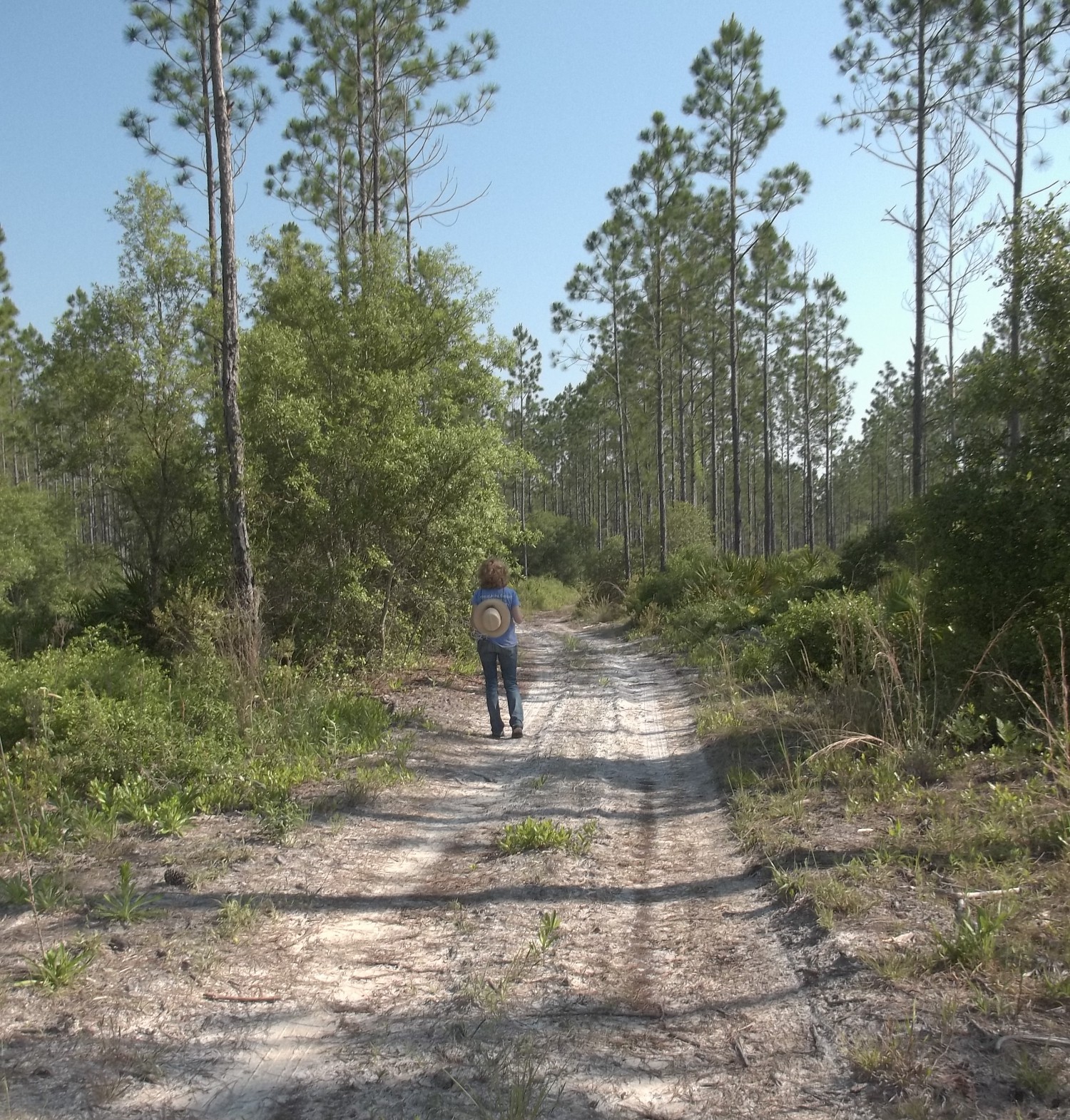
On Being “Beyond”

I’ve been thinking a lot lately on being beyond. Beyond what, you might ask, and I’m sorting that out. Basically, though, it started with realizing that I am now in that great blob of the population described so often as “beyond.” As in the headlines on the covers of women’s magazines,

“Get glowing skin! Customized tips for your thirties, forties, fifties and beyond!”

“Walking for Fitness at Any Age! Belly-busting strategies for your thirties, forties, fifties, and beyond!”

I don’t know the extent to which men are burdened with this. I can imagine, though:

“Get ripped! Washboard abs workouts for your thirties, forties, fifties and beyond!”

Yeah, I’m beyond.

It sounds sort of like a super hero, as if at 60 – when we enter into Beyond – we ought to get a cape. I have a cape – Irish wool, very warm. If you think that sounds more cozy than conquering, you haven’t met enough Irish women. (Note to would-be inventors of Beyond Woman action figures: spare us the wasp waist. We have the usual age-related spinal compression plus hormonally driven fat redistribution. Keep it real, that’s all we’re asking.  Because we are fine, better than fine, and in fact, beyond – just the way we are.)

It’s quite comical that the apparently youngish people who write so much media content put the newly 60s, the 60-year-olds’ mothers, their aunts, and centenarians all into one category, while the decades earlier are carefully delineated as if the difference between, say, 39 and 41 comprises dramatically more difference than between a 60-year-old and any given 80-year-old woman, and between that woman and a centenarian. It seems to reflect a silly and self-absorbed presumption about the nuances of midlife compared to the daily warfare of old age.

The implication is that, well, now you’re old and one old person is the same as the other. That is clearly ridiculous; there is far more difference between any two senior citizens than between any two 20-year-olds.  How could there not be? Life has been unfolding, every day full of experiences that compound the differences.  Every decision about habits, relationships, effort, sloth, etc., multiplies and intersects into complex and unintended consequences.  If you are 30 and reading this, consider how different you are from the people who were your best friends in high school, just 12 years ago. Wait another 30 years of daily choices and the ramifications of those choices, plus the unexpected and random events of life, and the differences between you will be inestimable.  

So, what does it mean, being beyond?  Well, the ones I speak with are beyond thinking they are in some sort of competition with the whole world.  They are beyond equally valuing everyone’s opinions; they stop craving indiscriminate approval. They are beyond getting aggravated about the minor speed bumps of daily life and getting tangled up in knots over every bit of bad news.  They are beyond thinking that social media alerts outweigh the person we’re talking with now. They have long been beyond pretending that cynicism is the same as wisdom.

All this means freedom: freedom to play freely with children without worrying about our dignity, sing in our cars, and ask questions without worrying we’ll look stupid. We adapt to what our bodies can and can’t do today. We can be creative because it doesn’t matter if other people don’t like what we paint or draw or bake or build. And, out of that freedom, we can offer encouragement and hope to people who are still trapped in the completely voluntary constrictions of being not-yet-beyond.

And so, here’s to being beyond, with all its freedom, challenges and gifts. 

What about you? What does being beyond mean – and will you wait until a magazine editor says you’re there to enjoy it?

Take a Break: A Shabbat Habit

I was asked to give a talk to a women’s faith group about finding peace in this busy, stressful world. The direction I chose was to invite each person to consider how they keep Sabbath. Beyond attending worship, Sabbath includes truly connecting with God, with family and friends, with creation, and a deliberate disconnection from the usual routine of life. Perhaps you don’t practice a religion and feel that some sort of mandatory day of sitting around doing nothing sounds boring and stupid.  “Sitting around doing nothing” is a corruption of what the day of rest was meant to be; think of it as a day to step away from your usual routine and focus on what is most important. If you’re having trouble figuring out what that might be, think about the people you’ve known who were dying, or what you focused on most when you lost someone you love.  The great existential crises of life tend to make some things stunningly clear.

There are entire books written about the importance of Sabbath time, of that weekly stepping back from rushing, overstimulation and noisiness.  This short column is just a little memo, to me as much as to anyone who might happen to read it and could use the reminder.

So why should anyone consistently and deliberately take a break from the routine? Here are a handful of the many reasons.

It gives you time to recuperate from overdoing. My car’s tachometer goes much higher than the engine is meant to run to function well.  It’s the same for us. We are not meant to run at “100%” 24/7.  Taking a step back from overdoing gives your body a chance to begin to recuperate from an overstressed state. A lot of people like to think they do their best work under pressure, but at a certain point, the nervous and endocrine systems will conspire to have you functioning in a way that reduces your access to your logical, analytic brain.  You probably won’t notice it’s happening, but other people will.

It gives you time to begin to take a different perspective.  Much of modern life is designed to keep us distracted and in an artificial sense of urgency.  This interferes with reflection, the deeper thinking about what is going on, where our actions are taking us, and what does and does not really matter. Put another way, it can help you figure out what is important, versus what feels urgent but is not as important.

It gives you time to focus on relationships. Whether it’s online contact with family far away, time for a walk with your loved one, a meal with family or friends, or a ruthless, hours-long game of Monopoly, a Sabbath mindset puts aside clocks and schedules and savors the time with the people we love.

It provides time for play, rest, and creative pursuits. These are all important. They are not accessories, nor does their value derive from their contributions to work performance the rest of the week.  They are part of being human and have inherent value without having to be subordinate to our work roles.

…and I, definitely, and you too, perhaps, are far nicer to be around when there’s been enough rest, fresh air, laughter, and time with people who love us.  Sabbath time helps make us whole.

That wholeness is part of holiness.  People who are too rushed and focused on work, on the “next thing,” on the next ping of an electronic device, are not able to tune into other people, to themselves, or to God.  Doing what people most associate with Sabbath – going to worship services – loses something if I show up with a rushed, preoccupied, “Yeah, okay, but what’s next?” mindset.  We need a break, a prolonged pause that lets what is important float to the surface of our attention.

If you think this sounds crazy…try it anyway.  Try to take one day a week and carve it out as a day set apart. Spend time with the people you love.  Read a book; take a nap, play games or work on a puzzle. Savor the music you’ve diligently collected. Make art. Write a poem. Go for a nature walk. Cook and enjoy a meal together.  Put your devices away except for purposeful connection with people not physically present.  Then try it the next week. Try it for four or five weeks, and see what you find.

Shalom. Peace.

The Serotonin Story

Unless your newsfeed features obscure psychiatry and psychology news, UK news, or the very limited US news coverage of the July 2022 publication of “The serotonin theory of depression: A systemic umbrella review of the evidence,” in the Journal of Molecular Psychiatry, you might not have heard this news. In a sweeping meta-analysis addressing six serotonin-based hypotheses and multiple studies, one of over 150,000 people, the conclusion has been drawn that, verifying what the senior author of the article, Dr. Mark Horowitz, noted is “known in academic circles, that no good evidence has ever been found of low serotonin in depression (Medscape, July 22, 2022).”  The evidence does indicate, in some studies, that long-term use of some antidepressants can lead to lower serotonin levels, just as long-term use of drugs that boost dopamine (amphetamines, for example) can ultimately lead to depletion and insufficiency of that neurotransmitter.

To repeat, in the academic world, it has long known there is really no substantive evidence linking low serotonin levels to depression. This is similar to the academic knowledge that marijuana, especially in its modern, heightened THC formulas, is a dangerous road to sometimes unrelenting anxiety or even psychosis.  However, since science is hard and so often inconvenient, these particular unpopular truths have usually been ignored. About one in six Americans, and about one in six English adults, are on antidepressants.  Yet the science says the rationale for these drugs – that they will fix a chemical imbalance in the brain – does not stand.  The science does seem to indicate a placebo effect, as well as some people experiencing a numbing of emotional pain, which might be sufficient to begin the work of the changes necessary to heal from depression. The researchers are quick to note that no one should stop these medications quickly; cessation ought to be done slowly, with medical supervision, because of the risk of physical and psychological ill effects during withdrawal.

Depression, as Dr. Horowitz’ team and countless other researchers and clinicians have long asserted, is a complex experience of physical, emotional, cognitive and social aspects.  It is also a rather fluid diagnosis, encompassing, as it does now in the current diagnostic manual, almost any two-week period in which sufficient symptoms are met, even when life’s events make it a completely normal response.  As I have noted in other articles, the grief exclusion for depression has been eliminated, for example. Are we, therefore, to believe that, once someone you love dies, you develop a potentially lifelong brain disease in which one neurotransmitter (among many) suddenly goes haywire?  Or is it feasible that death, or profound injury, or the loss of a job or home or friendship, etc., could cause sadness, physical pain and fatigue, and a tendency to withdraw from the very activities and relationships that could bolster recovery?

One of the interesting aspects of this study was its analysis of the very popular genetic explanation, a sort of, “It runs in my family,” explanation for depression.  Besides the scientific analysis of the large body of research indicating that that while a very small, initial study hinted this may be the case, the much larger research studies indicate it is not.  Of course, there is more to “running in the family” than genes. Some of this may be impacted prenatally via epigenetics, which helps tell which genes to turn “up” or “down” (a grotesque oversimplification; sorry) depending on environmental stressors such as severe poverty and want of food.  Then our families teach us whether the world is a safe place or not, and whether to take risks or not. Optimally, families teach us we are worthwhile, and how to make connections and corrections in relationships.  They set a life pattern in place that may ses us up for long-term healthy habits, or inflict a neglected or violent childhood that results in shortened telomeres and the prospect of an unhealthy and too-short adulthood. If the family fights dirty, abuses substances and one another, is rejected by the community via being fired repeatedly from jobs, ostracized by neighbors, and disliked by peers, the children will grow up to be unlikeable, rejected, angry and depressed adults.  There need not be any genetic component for this to be the case.

This type of adult will need to learn to heal wounds, how to develop a sense of purpose and meaning, and the cognitive skills to overcome depression. The latter includes developing the skill of interrupting and redirecting rumination, challenging and changing unhealthy thought and behavior patterns and thus changing emotions, and improving the skill of being in the moment, or, as Dr. Stephen Hayes has written, “Get out of your head and into your life.”

There are biological factors at play; anyone who believes they are suffering from depression ought to have a full physical exam, including bloodwork, to rule out medical causes for many of the symptoms of depression.  Good guidance on nutrition, sleep, exercise and natural light exposure are all in the physical realm of helping, and deficiencies in any of these areas may be sufficient to trigger the low mood, lack of energy, erratic eating and sleeping identified with depression.

There is, as can be seen, nothing here that is so complex that it is beyond the average person’s ability to understand and do.  For most of human history, the rhythm of sleep, hard work, natural light, meaningful connections with others and a strong accession to the transcendent provided a milieu in which profound suffering had both meaning and support. Our lives were designed for mental health.  This, alone, is so reassuring and empowering that one would think that this simple, ancient recipe for mental health would have never been relegated to a supporting role. Unlike the message that your brain is broken and there is nothing to be done except take this pill – which may make you suicidal, or homicidal, or cause tremendous weight gain, sexual difficulties, apathy, or moments of mania – the message of the Horowitz et al research is a hopeful and inspiring one: that it is possible to overcome the depression that threatens to crush your spirit.

Gorillas in the Mix

People who do not believe in God, or are afraid to believe in God, often make predictable assertions to support their position.  They will often start with a mocking supposition about an old wizard or some such image who sits on a throne in the sky.  Well, duh.  No mature believer takes those images literally any more than they still believe that their doll’s hair will grow back overnight, or that wishing their stuffed bunny is real will make it so.  No, we have outgrown childish things, thank you very much.

Another argument points to how badly people behave who claim to believe in God.  Well, again, no surprise.  Of course, humans behave badly; that is a big part of the whole story. Have you read our sacred books? Good grief, it’s nothing but lying and murder, greed and adultery and every sort of mischief, about from the beginning.  Adam screws up and blames both Eve and God! Before long, our partner in conversation points to the sexual abuse horrors of the modern age. There are no excuses for this. Religion, of course, isn’t the only arena with a flawed priestly class. The fact that scientific experiments often lead to no useful knowledge doesn’t keep people from vigorously asserting we must follow the science.  Some scientists torture beagle puppies and other ones discover how to vaccinate against polio and rubella.  We do not throw out the world of “science” because some of its clergy are pretty terrible.

Doesn’t all this magical God stuff just give us an excuse to not learn things? This intriguing question seems rooted in the confusion between parable, history, poetry, wisdom texts, and other types of books in the Bible.  Nowhere in Scripture are people charged with staying as dumb as possible, and many scientists will admit that the more they learn, the more apparent it is that what comprises the material world does not seem to be mathematically possible as a random series of events.  What is obvious, perhaps, to a physicist like the late Father le Maitre, the Belgium priest who first came up with what is now known as the Big Bang Theory, is a bit harder sell to regular people.

This leads to a particularly interesting argument: if God really exists, it would be obvious, and not just to Jesuit scientists.  How obvious, you might ask, and so would I.  As obvious as a Marvel Comics super hero?  Would God look like a Durer woodcut, wearing what were called JC leather sandals, and making a peace sign? Would the bad people be punished, instantly and with schadenfreude-gratifying anguish by a lightning-wielding Viking in the sky?  Despite the childish imagery, our non-believer wants to pin believers down on the issue of God’s supposed invisibility.  To believers, though, God’s existence is clear as day, although sometimes it is recognized on reflection and not in the moment. Still, God is obvious, as obvious as a gorilla in the middle of a basketball game. 

Of course, I am referring to the famous and oft-replicated experiment designed by Chabris and Simons in 1999.  Given the task of counting how often the basketball was passed between one team’s players, almost 60% of the subjects failed to see the person in a gorilla suit walk through the basketball court.

Yes, perfectly bright people stared at a short film clip, diligently counting basketball passes and bounces, and failed to see the obvious. Other scientists, around the world, have replicated this experiment with much the same outcome.  People focused on a task will ignore the obvious, even a person in a gorilla suit strolling through a basketball game. How much of a stretch is it that we miss other remarkably obvious things in our environments?

I imagine most people think they would be in the 40% or so that would notice the gorilla, but statistically, that’s unlikely.  We can’t all be above average.  More likely we all ignore, or fail to attend to, amazing things every day, selectively riveting our attention and discounting other stimuli as irrelevant or interference.  One listener’s static is another’s radio transmission.

The non-believer, and perhaps, at times, almost all believers, have some confusion about what is, and is not, God’s job.  I know I suffer with this one, too: don’t we all ask for things and view the apparent “no” or “not yet” as rejection, like when Mom or Dad once again says “no” to ice cream for dessert? Sometimes it takes a long time to see the utility of experiences, because a believer has to learn to see things, to the extent possible, through a different perspective – a God perspective. 

We will die.  That’s inevitable, and death seems to be easier for people who have made peace with the people in their lives, with God, and with at least most of the processes of aging.  It must be easier to let go of this life without too much reservation, when one has, often slowly and painfully, surrendered so much: health, beauty, quickness of body and mind, social power, loved ones, valued roles in our relationships.  Every loving mother (I am not a father and cannot speak to this) knows that our children move on from each level of parenting before we are ready to let go, and those practices of having part of life that is important to us peeled away is preparation for eternal life. Imagine how painful it must be for young people who are terminally ill or terribly injured and facing mortality, who have not had the practice of surrendering, over and over, to the losses of life.  A believer looks back over this pattern and can see, very clearly, where God was present (all through it) and how the love and compassion of God was extant in some people around them, the coincidences that were not coincidences at all, the seemingly random moments of pure, abandoned joy.

If you are preoccupied with the tasks of the day, riveted on a to-do list and the self-created commands of your bullet journal, do not be surprised if you miss the obvious, even something as obvious as a gorilla in the mix.

COVID-19: Surviving and Thriving

We’re worried about our loved ones, our own health, our school work or livelihood and what the months ahead will hold for our families, our communities, and our world. Being separated from one another makes it harder. Here are some strategies that can help:
1. Establish a daily routine and keep regular hours. Get up at your usual time; go to bed as usual. Use a checklist, a schedule or whatever structure helps you stay focused on positive, constructive actions.
2. Pray! Pray alone; pray on video-conferencing with friends and family; pray while watching livestream worship services. Include in this: daily periods of silence – not just telling God what you want done; instead, begin learning to sit quietly, observe your zigzagging thoughts, and not immediately take all your ideas so seriously.
3. Physical activity: an hour or more of physical activity, if you have medical clearance to do so, will help reduce the physical and mental effects of chronic stress. If you are able to be outdoors without being in danger of infection – enjoy a walk in nature. If not, seek opportunities indoors: walk in place; dance with your kids; be creative!
4. Reach out to someone who needs encouragement every day. Call, email, text, video chat, or send a note in the mail – be a light for someone who is alone and discouraged.
5. Check for news updates twice a day – more than that and you are often reinfecting yourself with the same negative news. Even if your logical brain recognizes it as last hour’s news, your emotional brain is again jolted with a bit of fight-or-flight about the pandemic and its consequences.
6. Odds are, you have more time on your hands than usual. Why not pick something to learn about on your own, with family, or with friends as an online/videochat study group? Can you practice a new skill, start a book club (hello, e-reader plus video chat!), or study a long-neglected area of interest? If you ever purchased arts and crafts supplies for “someday,” bought and neglected a language-learning app or fondly recall an elective course you’d wished was your major – it’s time to bring those interests into the light of day.
7. Take some time each day to journal about the experiences you are having during these strange weeks. Writing things out may help you clarify your emotions and thoughts, and help you see your experiences from a slightly “outside” perspective. Close your daily journal entry with a few things for which you are grateful.
There are lots of other ways to survive and thrive as people maintain social distance, self-isolate, and shelter in place…while we can’t control everything, we can exert control over our responses. Pick the story you want to be able to tell yourself, and others, about how you handled the COVID-19 crisis. Are you going to be able to tell a story of faith, compassion and grace under pressure – the year you became passable in Portuguese, started a book club via Skype or Facetime, and became a hula hoop expert? Or will it be the year you zoned out in front of 24/7 news for untold days, slowly becoming more burdened with ennui and inertia?
Choose to persist in faith, maintain your healthy habits, nurture others and grow in wisdom.
Choose life!

Two Old Ladies

There is a kind of dignified poverty encountered in 19th century British literature. Clean, neat, quiet, well-read, hard-working and uncomplaining, these people, dwelling on the fringes of society, are portrayed as reading classics by candlelight after a long day of work, perhaps aloud, while another family member darns a tired sock for the umpteenth time. They take in mending and other tasks from their social betters, and are sometimes invited to large gatherings where they meekly take seats on the periphery. They are fictional creatures, bound up as minor characters in musty books.
My (great-) Aunt Ann and Aunt Marion lived that dignified poverty, although it was the 20th century, in the cold water flats of Jersey City. My grandmother’s younger sisters, their time spanned Jersey City’s deterioration and ended before its re-gentrification.
Passing them on the street, you would not notice them: two older maiden ladies, often arm in arm, purses tucked under their coats in fear of purse-snatchers. Who would give a thought to two old ladies? They kept an extra dollar in one shoe, just in case. They dressed neatly, and well, and cared for their few possessions so that they could be worn for many years. Cursed with a genetic tendency to lose their hair in middle age, they wore demure, neatly styled wigs. Aunt Marion, being a bit flashier, had sparkly corners on her cat’s-eye glasses, and a preference for the color red. They worked in sweat shops and at other menial jobs. Aunt Ann, for a long time, operated the elevator in a business office skyscraper, an opportunity to work in a cleaner, quieter environment. Neither had an 8th grade diploma – the meaning of “graduation” in their time and place. They could not drive. They traveled little, to visit family sometimes. Their tiny apartment was sparklingly clean. They read classic literature, were knowledgeable about history, current events, and the activities of the people they loved. They loved, it seemed, everyone. They were cheerful and generous beyond their means, unflaggingly loyal to their nieces, their nieces’ children, and their children. Devout Catholics themselves, spending considerable time daily in prayer for others, they were remarkably tolerant of astonishingly stupid and bad behavior among their extended family. It mattered not how grievous the misdeeds: the errant youth was, at heart, Aunt Ann and Aunt Marion would assert, “a good girl,” or “a good boy.” After all, look how good she is to her mother; see how thoughtful he is towards his sisters. Anyone whose deity is harsh and unforgiving never met someone like Ann or Marion. The closest they came to criticizing was sharing a sidelong look and a single, slow nod, a kind of connection possible between two sisters who grew up together, raised two nieces from ages 8 and 15 together when one of their older sisters died, and shared the same ancient double bed most of their lives.
Strolling past, you would have looked through them, and unless you are a very special person indeed, you have looked through, perhaps, thousands of people like Aunt Ann and Aunt Marion. Not out of meanness, but because the people of the remnant – that pure and poor bit of holiness – are so often, apparently, invisible. Besides that, both poverty and old age frighten people, and thus we look away. If not away, exactly, then certainly not directly at them.
They have been gone for many years now, and I still regret that I was not a good-enough niece, certainly not worthy of the fondness and praise they heaped upon me. From Florida, I sent some homemade cookies now and then; a randomly spaced letter between birthday and Christmas cards, small gifts that I thought they might like at Christmas. I mentioned, during their lifetimes, my befuddlement at their level of praise for what a good girl I was to my mother, who loved them dearly and called them often. She stopped what she was doing to look at me and said, “Please. Do you think anyone else gives a thought for two old ladies?”
A sad question, that: who gives a thought for two old ladies, or an old man or two?
How hard is it, to give a thought for any other person? “People will not remember what you said or did, they will remember how you made them feel,” is the theme of the “most important award” at our granddaughter’s Catholic school, and one we were proud to hear she had won at the end of second grade. It is good to know that the kindness and sweetness we experience from her flows outwards, beyond the family. Her precocious insight into human nature is something she wields only with compassion. At seven, viewing Goodbye, Christopher Robin, she watched WW I veterans stomping balloons and announced, “They are doing that to learn not to be scared. “ She makes people feel special. Perhaps she has a touch of her great-great-great aunts’ spirits.
The gift of presence is that quality of attention: the attention that lets someone know that right now, they are the most important person, and whatever they are doing with you is most worthy of their attention. (My aunts, having read Tolstoy, could have told you all about it, but only if you brought it up first. They would not show off, and they would never broach a subject that might embarrass someone else.)
How powerful their capacity for presence within their humble, dignified way of life, a life that seems invisible to those who will not look at them. Then again, who would give a thought for two old ladies?

That’s Confabulous!

That’s Confabulous!

Your favorite uncle entertains every family gathering with the same stories.
His listeners realize they are not the same stories. The tales shift…small flourishes are added, details are lost and later denied (“Uncle, what about the cow? You mentioned the cow in the marsh last time.” “No, no – there wasn’t a cow. It was a goat. It’s always been a goat. Why would there be a cow in the marsh?”) Emotions intensify, diminish, and intensify again; the who, when and even the where are wobbly.
Is your uncle a pathological liar?
Well, he might be.
More likely, he’s a normal human being.
Memory is not a video recorder from an omniscient position. Our memories are constructed. Because it’s imperfect – and our brains want things to make sense – we fill in the blanks. There’s a little of filling-in-the-blanks in almost every memory, and in extreme cases, it is called confabulation.
Karl Bonhoeffer, German psychiatrist and father of martyred pastor Dietrich Bonhoeffer, coined the term. Confabulation, properly used, is the unconscious attempt to fill in the blanks in memory with made-up details, identified most with alcohol-related forms of dementia. The speaker believes it’s all true – but it’s not. Brain damage causes inevitable errors in processing and storing memories, and the brain valiantly attempts to weave a story out of scraps.
Related to confabulation is the tendency to “fill in the blanks” where there is no dementia and no logical reason to do so. People make up stories about other people, ruminate on them, discuss them with their companions. Later, when the subject comes up, the remembered imaginings are woven into whatever sparse facts were originally available. Electronic media has speeded up a process that used to require substantially more time and effort. The possibility of interrupting the downward spiral is much diminished.
A nearly harmless example: last year I moved my office from the high rise where I’d been for 19 years to two parish-based offices. My old office furniture was not needed in either location, so I gave it away to my parish, where it is apparently very popular with the youth group at their Sunday night meetings. Imagine my surprise when I heard from various sources that I had closed my practice, semi-retired, stopped working…you see the drift. People took one fact (she gave away her old couches and tables) and built a story around it (she retired). I have no idea how many referrals have not come my way due to someone’s – or several someones’ – confabulous storytelling regarding my work.
Less benign are the tendencies of unhappy people to ruminate and stir in speculations, scraps of other unhappy memories, fears and grudges, creating a new and often sinister narrative about a situation or people. This seems to be most effective when done in dyads or slightly larger groups. My observation, at least, is that the more shared memories, the more believable the confabulous concoction of “truth” that emerges from the co-rumination. Motivations are attributed with no evidence; “facts” are mutually invented and, since someone else believes or remembers the same exact thing – why, clearly, it must be true.
If this has ever happened to you, often in the context of perpetually unhappy coworkers, family members or friends, you know how useless it is to fight against the creative power of two or more brains that have mind-melded a mutual mural about…you. The only useful thing one can extract from the misery is a warning against being part of that type of dismal discussion.
Even with honorable intentions, memories shape-shift over time.
Emotion tints memories. Next time you are in a generally happy mood, pull up an old memory, perhaps a time shared with a loved one who has passed. In contentment, reflect on the events of the day and the joy you felt with that loved one. Really sink into the memory. Next time you evoke that memory, it will have shifted a bit to emphasize the joyful aspects – the smile, the warmth of heart – whereas if the same memory came up when you were sad, somehow it would be tinted. You might notice that other memories that feel the same way easily come to the surface: that’s another aspect of memory. Our memories are linked by emotional flavor, not just content. That’s why someone who is angry at you seems to have a boundless recall for every stupid and disappointing thing you have ever done.
Words also shape how memories are shaped and stored. A car comes up from behind, passes you, enters your lane and, a half-mile later, ends up in the ditch. You pull over to call 911 and see if you can be of assistance. Later you are questioned about your observations. How much did the car swerve? If asked, how much did the car fishtail…your memory will subtly adjust. The next time you recall it, the film may contain a touch more veering about.
Personal beliefs and biases enter the picture, too, and help form “memories” that are less than precise. It might be as subtle as “assuming” that someone meant something and then sliding into believing that they implied it, and subsequently taking offense by something that was unsaid as if it had been a slap. It could take the form of filling in the blank in someone’s appearance or comportment based on biases. Alternately, beliefs or entire cosmologies are attributed to someone based on scraps of “evidence” and then merrily embraced as “truth.”
It’s an interesting dilemma, encompassing the Commandments (Thou shalt not bear false witness) and Pilate’s coyly avoidant, “What is truth?” False witness, after all, is not just perjury. It comprises gossip and unnecessary tale-telling, both inevitably not the whole truth, as any elementary school teacher can attest. It’s all the ways in which we might fill in the blanks, perhaps consciously but, I suspect, as often reflexively, justifying our own emotional wallow with imagined and projected details.
Isn’t that confabulous?

What would you do?

What would you do if…
You weren’t afraid of failing?
Didn’t care if people thought you were weird?
Really believed the things you say with the crowd at your weekly worship service?
Had six months to live? (and how do any of us know we even have that long?)
You would do something differently. You might stop doing something, start something else. You would shake up your life without much trepidation.
So, tomorrow (or in five minutes), do one thing a little bit differently…a little bit more as if you were free from fear, from the need for constant approval, from doubt.
Follow that up with one more little thing, one more step.
Maybe you will do something you didn’t think you could do, without worrying about others’ opinions, and find out your faith is stronger than you’d thought.

Go and Do, for Me and You

Verbs, like “go” and “do”
In a recent on-air segment, Jamie and I (he’s the afternoon radio talent for Spirit FM, the local Catholic radio station/Christian pop music station where I’ve been volunteering since 2009) were discussing various social protests. He had asked me how to handle the flood of social media, with people posting/re-posting/re-re-posting, and the pressure to have some sort of opinion/assert some stand on perpetually protesting celebrity.
I try, but don’t always succeed, in preferring action verbs. Like, “go” and “do.” I don’t much care for meetings. I don’t like sitting around talking about how we can help the homeless and severely mentally ill. I went and did (full time work, almost 5 years). Jesus didn’t say, sit around and have lots of committee meetings. He said, pretty much, Go… (He also had something to say about babbling on and on, so I will move along.) I would rather teach than talk about teaching, do art than sit around talking about art…you get the idea.
So my thoughts are, go and do. It would be far more helpful – if, for example, we are talking about the real and obvious pain in poor neighborhoods – to go and do. Mentor a kid. Be a Big Brother/Big Sister. Organize a community watch organization. Do pro bono work in your field. Provide free tutoring. Be a Guardian ad Litem. Etc., etc. Go and do. Standing around getting attention for taking a public position that costs nothing seems a little self-serving.
It reminds me of the time a woman I knew criticized me for failing to wear red on some arbitrary date publicly announced to be the day to wear red to support women’s heart health. The only woman whose heart I have much influence over is my own. I had already exercised, gone to church, had good conversation with my husband, eaten a healthy breakfast – in other words, it was 8 AM and I had done all I could for THIS woman’s heart health. Nothing I was going to do, besides pray and try to set a half-decent example, would help anyone else.
It also brings to mind the big test for reports of visions of the Blessed Virgin Mary. Such a report requires much evidence, but a primary benchmark requires that Mary points towards Jesus. There is no credibility if the reported vision does not direct people towards Jesus. Such an experience is not something from the Good side. It might be a well-intentioned, innocent delusion, but it is not Mary. Mary doesn’t showboat.
So…if terrible injustice moves you, go and do something concrete, specific and clearly helpful for one particular person. Keep the meme to yourself.
…and more on “Go” and “Do”
Teen and young adult mental health took a drastic, terrifying turn for the worse beginning in 2007 – and the stats keep worsening, especially since 2012. This, according to a lot of research, can be traced back to the smart phone, according to San Diego State University professor, researcher and author Jean Twenge. Her recent book, “iGen: Why Today’s Super-connected Kids are Growing Up Less Rebellious, More Tolerant, Less Happy – and Completely Unprepared for Adulthood – and What that Means for the Rest of Us,” provides the results of not just her original research but meta-analysis of generations of data on the pattern of mental health and activity for youth.
It seems like constant connectivity has led to less “go” and “do” and more detachment and isolation. It’s a double-dose of negative: the ineluctable distance created by screen-based communication and a deficit of direct experiences. We were not designed to sit and click; we are made to go and do.

Dr. Lori Puterbaugh, LMHC, LMFT, NCC

Posts are for entertainment and not meant to be construed as treatment or professional recommendations. If you need mental health assistance, please contact a licensed professional in your area.

To Live Long, To Live Well: The Ongoing Research

Cognitive decline – dementia – Alzheimer’s disease – senility – to lose our independence, our memories, our minds – our “selves.” This is one of our greatest nightmares. But, what if this precipice – the thing people seem to fear worse than death – is almost entirely avoidable by changing how we live?

The Alzheimer’s Solution: by Dean Sherzai, MD, PhD and Ayesha Sherzai, MD (2017) asserts that this is indeed the case. You won’t find wishes, a few convenient anecdotes and flimsy, recent research. The doctors Sherzai tie together decades of substantive research from multiple, credible sources (including ongoing Blue Zones research) and their own research and medical practice. The result of this work: a straightforward and remarkably simple (albeit not easy) recipe for long, healthy mental functioning.

Unfortunately, it requires that we do stuff. Differently. In a lot of cases, way, way differently.

Here’s a synopsis:

They use the helpful and appropriate acronym NEURO: Nutrition, Exercise, Unwind, Restore, Optimize

Nutrition: quite specific nutritional guidance – recommending a largely vegetarian diet high in specific types of nutrients.

Exercise: not just a regular appointment at the running path or the gym, the research emphasizes activity throughout the day on a frequent basis.

Unwind: Managing stress healthfully and living with purpose.

Restore: Enough good quality sleep (this is a tough one for me). There is no substitute for sufficient sleep in terms of long-term brain health

Optimize: a lifetime process, and never too late to start: complex, creative, learning and doing. While the puzzles we encourage elders to do to keep their minds nimble are a small part, greater benefit comes from ongoing learning, complex tasks, mentoring/teaching and other activities that use multiple skills.

The book, published this past summer, includes interesting case studies, questionnaires and specific recommendations to make changes as needed on a case-by-case study. It’s helpful to remember that, all over the world, there are “Blue Zone” communities – places where most people live long, robust lives free of chronic diseases and dementia – where these lifestyle choices are just “normal,” not sacrifices. At least, I tell myself it’s helpful.

My challenge, which I share and dare towards you: do some investigating on this. If you’re intrepid – seek your physician’s guidance and take it from there. If you’re a little timid, hesitant or just plain skeptical, pick one piece that’s easy to do, get the medical OK, and go for it.

Dr. Lori Puterbaugh, LMHC, LMFT, NCC


Posts are for entertainment and not meant to be construed as treatment or professional recommendations. If you need mental health assistance, please contact a licensed professional in your area.