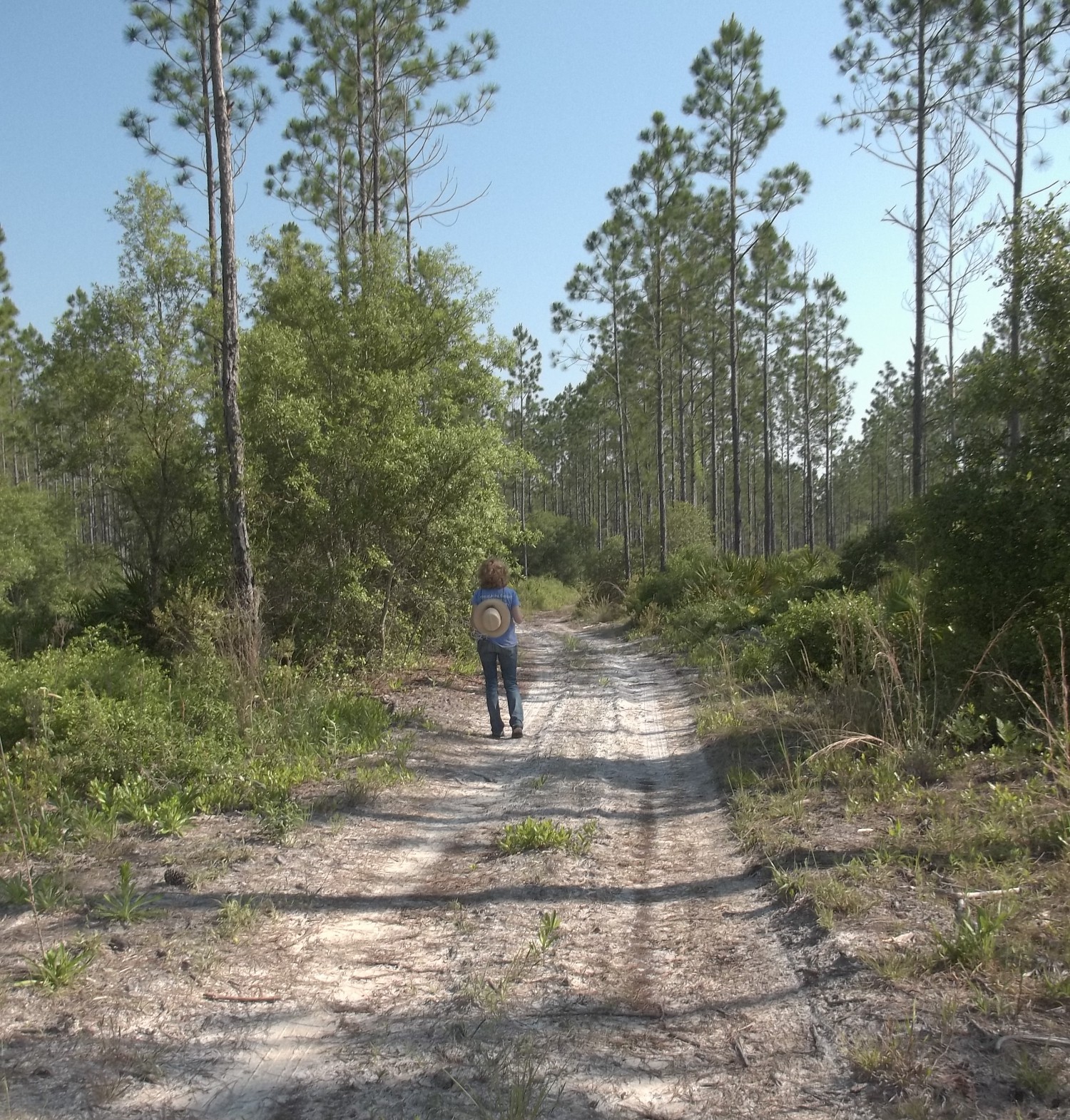
7 Things to do When Life Is Crazy

Sometimes, life just goes horribly sidewise.  This week, like most weeks, I spent time with people who have lost their homes to natural disasters, lost their job, had loved ones die, and sometimes are grappling with multiple serious problems.  The world seems crazy, you can feel like you’re going mad, and it is oh-so-easy to slide into attempts to numb the pain that are ultimately harmful.

It’s easy to advise people on what NOT to do – don’t drink alcohol. Don’t use drugs. Don’t eat a lot of junk food. Don’t let yourself scroll through social media and/or your newsfeed for extended periods of times. It’s easier, though, to “do” than to “not do.”  Anyone who has tried to break a bad habit knows that; it’s easier to “eat an apple” than to “not smoke/drink/eat a bag of cheesy poofs the size of a pillow.”

So, here are seven things to do – and keep doing – when life is crazy

  1. Say grace. Say grace when you get to sit at a table and say grace – together – when you eating a granola bar in the shade after another few hours of trying to make sense of the debris that used to be your home.  Say grace when you are out on a hike, just about out of water, and have miles to go. G.K. Chesterton famously noted he said grace when he sat down to write, to draw, etc.  A moment of gratitude shifts the focus from the mud to the mountaintop.
  2. Put the social media/news scrolling down and, instead, watch something that will make you laugh, preferably either an episode of a sitcom or a funny movie. Why? These require sustained attention, will bring a focus on characters who have ups and downs, and have the potential to make you laugh. Laughter releases dopamine – that feel-good chemistry that helps you heal.  Make it better and share that humor break with someone else. Sharing laughter with the person you love helps that sense of connection that seems strained, or even lost, when life has gone crazy.
  3. Eat food that is good for you. Ongoing extreme stress causes havoc in your body, including your brain, and getting decent nutrition is essential to your well-being, now and later.  I did the price comparison:  a precooked chicken, a bag of salad, some fruit and a little something else healthy, for example, feeds two or four people far cheaper than most or all fast food. Your brain will thank you.
  4. Listen to music that is soothing: piano or guitar, instrumental jazz, classical, baroque:  as tempting as it may be to listen to “angry” music because you feel so angry about what’s become of your life, that will only reinforce your distress.  Let peace soak into you, however slowly it may come.
  5. Check in with other people every day. Reach out to someone to see how s/he is doing. It helps us get out of our own heads, our experiences, and feel less alone.
  6. Get outside, preferably in the morning, for natural light exposure. You don’t need to bake in the sun; just get out there. Take a walk if you can.  Early natural light helps the brain regulate the sleep/wake cycle, setting you up for a healthy rhythm of melatonin production over the course of the day.
  7. Ask God to show you where He is at work in the events of your life, because when life goes crazy, the fog can make God’s loving presence hard to detect. Ask for the grace to notice the helping hands, the kind words, the moments of clarity.

I’m sorry if life has gone crazy. It is scary, and lonely, and disorienting when disaster strikes. If you find that you are sinking, reach out for help:  call your local helpline (in Pinellas County, FL the number is 1-888-431-1998, for the new Care About Me program that helps match those in crisis with an appropriate mental health provider).  Call a friend, a family member, or, if you are feeling unsafe and considering suicide or plan to harm yourself or others, go seek immediate help via 911 or go to an emergency service location.  When life has gone crazy, it is natural to feel frightened, confused and even helpless, but remember that none of us were designed to “handle it all.” We are, in fact, designed so that our strengths are distributed so that each has something to offer but none has every gift and ability.  Please reach out for help if you feel you are sinking.

An Alcohol Dilemma

Alcohol can be a touchy subject. Addictions, generally, are frequently considered to be only something other addicts, including those in recovery, can help with.  Someone like me, who never drank regularly and now, since surgery a few years ago that included a bad anesthesia reaction, can’t drink any alcohol except, oddly, 3 or 4 ounces of Guinness on a couple of holidays each year, is automatically considered ineligible to be helpful. Despite my ineligible status, in a previous post, I included the life lesson that, for many, alcohol is not a friend.

This assertion flies in the face of much research, perhaps most famously Blue Zones data, which includes moderate alcohol use as a generally positive factor for long life. On the other hand, avoiding alcohol is well-supported by substantial research in the medical field.  Shake or stir in my non-drinker status and, well, it seems like I am a fun-killing fuddy-duddy looking for an excuse to ruin my clients’ good time.

What are the benefits of alcohol? Much research has focused in particular on resveratrol and relaxation.  There ways to get antioxidants and relaxation that don’t carry the risks of cancer, liver and brain damage, and some of the regrettable behaviors that alcohol can carry along. This might be a worthwhile topic of discussion with your healthcare provider. Eating grapes, prayer and meditation, physical activity and laughing might hit all the right keys on this.

If you are misusing alcohol – relying on it to “unwind” after the day, to “help you sleep” (it doesn’t, actually), or to get through social situations (there are ways to deal with social anxiety that don’t interfere with functioning) – please seek help. Other signs your relationship with alcohol is unhealthy? Using more than the recommended amount – 1 serving max per day for females, 2 for males. Feeling anxious if you run out, or worrying you will run out. If you worried more about stocking up with booze than water, batteries and nonperishable food for the past two hurricanes, that’s a bad sign, too. Any binge drinking is a danger sign. Binge drinking raises your blood alcohol to .08 in two hours or less, usually four or five single drinks. Any changes in your functioning at home, work, or socially are likewise danger signs. Pretending that these signs don’t apply to you is itself a sign.

Where to go for help?  Go to an AA meeting. Call a therapist. Call 866-210-1303, or 211, or another helpline. See your physician. Tell someone you trust you’re ready to make a change. Just take that first bold step towards help. There are good people eager to help you change the course of your life for the better, preferably before it becomes unmanageable.  

Random Life Lessons

Here, on a beautiful autumn day, are a few life lessons I’ve picked up on the way…perhaps one will be useful to you.

Walking in the morning, before sunrise, can lead to being stopped by law enforcement, who, upon getting a look at me from the front (wrinkles and rosary beads) say things like, “Oh. I thought you were a kid out breaking into cars.”  Wearing a reflective vest and a skort, instead of baggy gym shorts, has solved that problem. Either that or I have succeeded in looking old from behind. The lessons: be reflective and dress appropriately to the task at hand.

Don’t save special stuff for special occasions.  Eventually someone else will just throw your treasure away or it will end up, sad and dusty, on a thrift store shelf. Use it up, whether it’s that fancy cocoa mix someone gave you at Christmas or your grandmother’s crystal. Drink sweet tea out of a fancy goblet.

Not from personal experience (see a prior post about this issue) If you change your hairstyle and/or color on a regular basis, you might not be the best candidate for a tattoo. The same goes if you try to destroy or at least hide any photos of you from five or more years ago because you can’t believe you left the house looking like that.

If there is something you really want to do, and it’s realistic for you, then pick a reasonable time frame (say, one year) and reverse engineer backwards all the way to tomorrow. If you want to achieve “X” – your G.E.D., your master’s degree, a marathon, writing your first book – there will be something specific that you do and/or don’t do tomorrow that is different than yesterday. Then the next day, you will, again, do/not do something different because you have this goal. If it’s your G.E.D., and you want to pass by one year from now, then the first thing to do is look up where to go for information. Then call the place. Then go. Then decide what you will give up to make time to study. Then do that: give up some of that time to study. Learn how to study (a lot of people get to college without knowing how to study; no shaming). And study again and again. Enlist people who will encourage you because it will be hard and discouraging and there will be people who try to pull you off course.

Don’t spend time around people who discourage you when you are trying to become a better person. If you have thought things through, and realized you must change some habit or adopt a new plan for life, and wise people agree it is a good move, then be very skeptical about the motivation of people who try to interfere.

Unless you have doctor’s orders to the contrary, odds are that alcohol is not your friend. Remember when Pinot told you what a great dancer you were at your cousin’s wedding?  Or how some kind of brown liquor helped you straighten out that miscommunication with your in-laws? Yeah, not your friend. Besides, alcohol is eager to share bad things: disrupted sleep, increased risk of cancer (it’s a major factor in a number of types of cancer), dementia, prematurely aging skin and who knows what else. Disclaimer: I don’t drink and I’m not in recovery, which means this one comes from 1) observing life and 2) reading the medical research.

Be wary of people who think it is funny to scare animals. A guest who tries to frighten your cat because it’s “funny” when the cat’s fur stands on end needs to go away and not visit again. This is a red flag, no matter how “nice” you thought this person was. They exert power by terrifying others; is that nice? No. If a five-year-old could easily explain it, I shouldn’t have to say another word.

The above does not include the person who is willing to make an absolute ass of themselves trying to scare a squirrel, bunny, rat, lizard, etc., out from under their parked car so they can leave without killing it. 

Try, if you can, to be patient with people who act as if they didn’t need to let you know about something they wanted you to know about because they put it on social media. Give yourself permission to explain that you don’t spend time looking for something you ought to know on social media. Unless you do, in which case you have bigger problems, perhaps, than missing one person’s newscast.

And, in closing, bear in mind that one person’s life lesson is not necessarily yours…but then again, maybe it could be.

Are we now voting on mental health?

Here in Florida, we have a process in which citizens can gather enough signatures and put an initiative on the ballot to alter the state constitution.

I vote no, even if in principle the idea seems good, because I don’t think that a majority vote is the way to treat a constitution. I would vote no, even if the amendment proposed to preserve, in perpetuity, the tax-exempt status of dark chocolate due to its obvious necessity to life. The whole idea of a constitution is that it sets forth basic principles: natural law, the essentials. All other laws and rules get held up to it to see if they fit within the boundaries of that constitution.  

In the upcoming election, Floridians will be asked to vote on a proposed amendment that would legalize non-medical marijuana for adults age 21 and over in Florida.  My libertarian side doesn’t much care what people do until it impacts other people. People who mess up their brains with drugs often seem to feel entitled to drive; ultimately, they demand their healthcare be paid for by other people; they clutter up emergency rooms, and do all sorts of other things that do impact others, making drug use a social, not a merely personal, issue.

Professionally, this deserves a resounding “no.” Not just because popular votes are not the way to treat a constitution; but because there is so much information not being openly and clearly presented on this.

To begin with, it is fairly laughable that there is so much so-called medical use of marijuana, when the research is sketchy for even the handful of possibly legitimate uses.  Anxiety? Insomnia? Marijuana is practically a recipe for anxiety, and in fact, can lead to very severe anxiety, especially among younger users.

Secondly, most people have been effectively shielded from information on the impact of marijuana on mental health, physical health, and crime. Why? Whose interest is served by hiding the number of ER visits for psychosis, panic, and/or hideously violent vomiting due to marijuana or other forms of THC use? Whose interest is served when the impact of THC in criminal activities is hidden? There is evidence that use of the modern, stronger forms of marijuana is leading to substantial increases in psychosis, self-destructive behavior and violence against others. Most people seem quite unaware of this. Did you know that the emergency room visits due to marijuana use – psychosis, panic and/or “scromiting” (screaming and vomiting) increased 53 to 400% in the first few years, from city to city? Or that even in Europe, the rate of marijuana psychosis slipping into schizophrenia has increased between 300 and 400% in the past twenty years?  In Colorado, a tragic experiment in progress on pot legalization, emergency room visits related to marijuana use increased 500% in the 5 years post-legalization, with severe psychiatric symptoms including psychosis and panic attacks. Then there is the pain and terrifying projectile vomiting typical of cannabinoid hyperemesis syndrome.

Critically, marijuana is not safe. It is prescribed medically (despite the evidence being rather variable and inconclusive) with a shrug: “well, the possibility of benefits outweighs the risks.” Fair enough; no reasonable person is worried about someone who needs appetite support or help with pain while in treatment for cancer or AIDS having long-term effects from marijuana; the possibility of benefit outweighs the risks.

That doesn’t make it safe. In 2021, about one-third of high school seniors were using marijuana in some form. We ought to be very worried about the effects on teenagers and young adults, whose brains are still in development and whom, evidence shows, will have long-term impacts years after they have stopped using marijuana. That, of course, assumes that they stop. About 17% – 1 in 6 – of people who start using marijuana in their teens will become addicted. The addiction rate is about 9% for adults, and that is old data from 2015, and thus trails the upticks in use and in potency.

The increased risks, especially for young males, for unremitting anxiety, psychosis, and a lingering apathy and lack of initiative ought not be brushed off or laughed off with stories of the late 1960s. Then, the available marijuana caused hallucinations for many people and was far less potent that modern varieties. In the past 40 years or so, the potency has increased about 4-fold.  For adolescents, the rate of suicidal ideation triples in those with cannabis use disorder; the rate of depression nearly triples; truancy, fighting, poor concentration all increase markedly with regular cannabis use.

Interestingly, we are urged to accept psychiatry when it comes to destigmatizing mental disorders and treatment, but this enthusiasm for psychiatric expertise melts away when it comes to legalizing weed in all its forms. The American Psychiatric Association still officially opposes the use of marijuana, noting it is not research-supported for psychiatric diagnoses and bears substantial risks for psychiatric side effects. The experts are discounted on this one thing. What could possibly drive that behavior?

Stepping back and gazing at these points – and I am sure there are others – I ponder why there is so much interest in promoting this particular amendment.  Is it because, as the old Judas Priest song goes, “Out there is a fortune, waiting to be had”? Is it really the case that so many people who are enthusiastic about bossy rules about the size of people’s American flags, house colors or the time people roll out their trash cans are libertarian on this one thing? How will they feel when it is their son or daughter who slips away into depression, relentless anxiety or psychosis?

The argument is made that legal marijuana will be pure – not laced with fentanyl or other deadly substances. Assuming this is the case, and that there arises no underground market to avoid taxes – moonshiners versus revenuers, remember? – the question remains as to whether the risk is worth it in terms of psychiatric and gastric impacts.

Who will pretend, later, to not have known how dangerous what will no doubt be called something like “Big Weed” really was, and rush to sue because of brain damage, the loss of loved ones to suicide or cancer? What about those whose death is due to initiating violence while “high” and being killed by someone in self-defense? What class action suits will emerge to right the wrongs of mass hospitalizations for psychosis and its long-term medical management? Will it in fact be the same ruse of not-knowing used against tobacco, despite its having been referred to as “coffin nails” even in the 1800s? And beyond these major effects, what about the many lives and talents wasted by indifference and ennui as the years-long lingering apathy steals young adulthood and early middle age?

What would make sense:  this proposition as a possible law, not as an amendment, with publicly available hearings and testimonies from all sides: those incarcerated for years for petty possession charges and those whose loved ones spiraled into psychosis and suicide.  Let’s hear sworn testimony and evidence from medical experts on both sides and statisticians who can break down the data on crime and medical impacts.  Then, having heard the information, we can, through the legislative process, pass a law that adheres to the principles of the state constitution and best suits the facts of the situation.

Why am I still here?

“Why am I still here?”

I hear that a lot. Perhaps you do, too.  The veteran who survived a firefight that took his friends; the person who woke up in the hospital to find they were the only survivor of a car crash that took their family; a survivor of a natural disaster that took many lives.  Many adults, perhaps most, have had such an existential episode. I’ve been in car accidents that could have killed me; survived acts of violence that could just as easily have tipped over into lethality, lived through serious illness. None of those are particularly unusual, and only mentioned to underscore the point.

“What do I live for now? What ought I be doing?”

That’s a tough one, yet it is the question every believer is tasked with as the subtext of life every day.  There is some chatter among the media that presuming that one’s survival is in God’s hands is some sort of unusual perspective. It is not my intention to speculate on any particular person’s interpretation of what that means. For those who find it perplexing, I hope to offer at least this Christian’s perspective. God never wants evil; it takes our free will for that to happen. Many of us wrestle with trying to figure out why God allows bad things to happen. Allowing something is not the same as wanting something, that’s for sure; every parent has to learn that lesson, fairly early on.

You may want your toddler to go to sleep. You may want that very, very, very eyes-burning-with-exhaustion much. But you have to allow the reality that the toddler will keep on singing songs, or whining, or coming out to complain. (If you do anything to “make” a child sleep, whatever adult is aware of it is required to report that to child protective services). C.S. Lewis does a much better job of explaining this particular point.  God, of course, chooses to allow or not. I’m not going to understand why because I am not God. God creates everything and I can do not a thing, even catch a breath, unless God wills it.

Our job is to figure out what God wants from us in each emerging situation, whether the situation itself was His will or not. For believers, every breath is a gift; there is no guarantee of another. Pondering what we are to do with these circumstances and assuming God has a preference in terms of our choice of action is not a big stretch.

So, for a Christian, God did not want Corey Comperatore to die in gunfire, protecting his family. It was not God’s will for the gunman to shoot. Mr. Comperatore clearly discerned his purpose was to protect at all costs. He had, apparently, discerned this over and over until his reflex towards self-sacrifice looked “automatic.” That seems to be a sign that his formation into the nature of Jesus Christ, the nature of complete self-giving, was something he had truly embraced.

And now, everyone left behind must discern what God asks of them in this new, tragic circumstance. Over the course of years and months, his family will each have to discern how to restructure life and find a different path forward. Friends and neighbors will need to discern, ongoing, how to provide friendship and support when the months pass and the spotlight of media attention fades.

The question doesn’t necessitate a tragedy, such as an accident, tornado or an attempted assassination. It is a perennial question: every person mourning infertility, every widow, widower, and bereaved parent.  Adolescents are supposed to wrestle with it; the elderly are, too. And all along the way, it is the question every thinking person ponders when transitioning to a new stage of life. We ask it at those times, too, that are both joyful and sad; a child grows up and successfully leaves the nest: mission accomplished; but what is my purpose now? Retirement comes; well, then what? What is your purpose now, beyond a vague sense of perpetual recess?

Being Christian means striving to be conformed to the nature of Jesus Christ. That means seeking not just to avoid being “bad” but attempting to do God’s will in every situation.  Is it “bad” to spend an entire lazy weekend afternoon with a pot of tea, a good book and a handful of chocolate? Especially on the Sabbath? No, lemon ginger tea and Lady Gregory’s book of Irish folklore, edited by W.B. Yeats, don’t make the list of “do-nots,” but the entire afternoon? When a friend needs a caring ear or a letter? When a nagging thought keeps intruding with that starts with, “I really need to reach out to…” maybe the “not a bad thing” needs to step aside and yield to the “better thing,” a “because” for the moment.

And, when you’re wrestling with the big questions of life, the little “becauses” become a path through the dark places.

Why Ask Me That? Third in a series on questions in the therapy room

Someone who is struggling with anxiety just wants to feel better. It’s understandable; anxiety feels awful. The physical symptoms, so often hovering just below full-blown fight-or-flight; a mind that won’t rest, a brain that hops from topic to topic like a rabbit in a vegetable garden. Add to this the fear that so many people have when they come to therapy:  will the therapist tell me I’m crazy?

No; no, I won’t tell you that, but I am probably going to annoy you with a lot of questions that may seem to be irrelevant to your suffering. My paperwork asks about your history, decade by decade; your losses; job satisfaction; health issues; your alcohol and drug use; your prescribed medications; your exercise and sleep patterns. I ask about screen time, social memberships, supportive relationships. I ask a lot of questions, and I can tell who thinks those questions are irrelevant by who leaves them unanswered, handing me incomplete paperwork and acting surprised when I follow up on the many blank places.

All these questions are important, and here’s a short discussion on just a few aspects and the explanation.

Your sleep patterns, and any difficulties, can both contribute to, and be worsened by, anxiety, stress and depression. If you need more, or better sleep (and most people do), figuring some ways to improve your quality and quantity of sleep can help across many categories of your life: focus, memory, energy, stress level, and mood. When these improve, relationships can often improve, as you might expect when you can pay attention and be less cranky.

If you have major health conditions that are not properly managed, these may contribute to problems with sleep, anxiety, or mood. For example, poorly managed diabetes, besides being physically very dangerous, impacts focus and mood. I would refer you to your physician to see if there are problems that require medical attention.

Social isolation is a recipe for loneliness and depression. Social media use tends to make this worse – something that seems weirdly contradictory. Lonely people eventually withdraw, and this creates more loneliness, isolation and possibly anxiety and depression. We need to explore ways to enter back into activities with others.  From my guidance counselor days: children who are isolated suffer. If you ask a child if s/he has friends, and then ask him/her to name those friends, and there is a flash of hesitation, you know you are dealing with a child suffering social isolation. Just so, adults who cannot identify some supportive relationships and what is good about those relationships is an adult who is emotionally isolated.

I ask questions that make sense to me; if they don’t make sense to you, please ask why I’m asking. Thanks!

Why Ask Me That? Part 1 of a Series on Questions in the Therapy Room

“It’s a lot of paperwork.” 

Yes, I agree, it is. And all that information is helpful and useful for me in what I presume is a shared project: making positive change in some aspect – or many aspects – of that client’s life. 

The number of people who simply skip sections, as if they were optional, or not relevant, is significant. This gives the opportunity to have some conversations about those questions, and their relevance.

For example:

If someone routinely shortchanges their sleep, health problems will develop. In the short term, irritability (which tends to mess up personal and work relationships), less efficient short-term memory (ditto), distractibility (ditto) and impulsivity (mega-ditto) are possible contributors to whatever the primary complaint may be.  So maybe we should address that, too!

If you are extremely extroverted and are working remotely and living alone, you have created a perfect petri dish for restlessness, depression, and dissatisfaction. Those are psychological and emotional factors that create problems across domains. Deliberately arranging adequate real interactions with others will be essential to meeting that basic need.

If you don’t have five or six people who you can identify as part of your social support system, such as friends, family, a mentoring colleague, etc., there may be a heightened risk for depression and anxiety.  That doesn’t mean you confide personal problems with all those folks; you might have someone who provides support and encouragement in career-related areas, some people you can pray with, people who you play sports or exercise with and enjoy lighter conversations.

There are no questions on my paperwork that are not rooted in helping the client and me have a grounded understanding of the client’s strengths, struggles, and emotional resources for making positive change. Just ask me.

Social Contagion

(This post mentions eating disorders, self-harm, substance abuse and suicide. Please reach out to your local emergency services if you or someone you know is struggling with any of these!)

When I was in 9th grade, I unwillingly, and briefly, attended our parish’s very small Catholic Youth Organization meetings (CYO.  The group comprised mostly boys, all altar servers, who played ping pong and pool with our associate pastor, a well-meaning middle-aged priest from Poland. The only other girls were the type of enmeshed best friends that are normal at that stage of life. Their shared passion was Bay City Rollers. They put together, in that era of typewriters with ribbons and no internet, a monthly fan newsletter with some success.  Life would have been oh, so easy, if only I could have mustered enthusiasm for the boys from Edinburgh.  I tried. But, despite the social costs, a Dylan fan I remained.

Go ahead, laugh. But you have faced the challenge of social contagion, too. You may even now be wearing a style of clothing you don’t actually even like. It’s just what’s “in.” As a teenager, you wore the right clothes, or pined after them; you strove for the right hair style. You wore the trendy colors even if they made you look ill, and were anxious for the approval of your peers.  It’s not just kids who follow the crowd; every married person knows that when your spouse’s friend circle comprises mostly divorced people, there may well be trouble ahead.

Over the years, we’ve seen waves of societal concern about the risks of contagion. Were young people teaching each other to cut or burn themselves (1990s), how to purge or starve themselves (ongoing since at least the 90s), how to get a so-called “high” from household items? Could a teen’s suicide lead to copycat attempts?  The answer to all of these is, yes.

Children now are not gifted with preternaturally adult-style brain development. The ability to sound sophisticated by parroting what you’ve read or heard is not the same as an adult brain with a well-developed executive function – something that takes into the early to mid-20s to acquire.  Your kid is not any more resistant to peer pressures of even the subtle type than you were when you were screaming in excitement over a band because all your friends were.  As it happens, they are more vulnerable, because peer pressure can surround them wherever their cell phone works. Odds are, you were free – as soon as you were off the school bus, there was some space for other influences to counterbalance the noise of adolescents striving to show their individuality by being as much like their desired group as possible.

Notice the vagaries of the teenage years: they move from music star to music star, aesthetic nomads in lockstep. No one wears jeans; then they all wear jeans. The games, the accessories, even the car you drive falls under the anxious eye of a child who wants to fit in.  It’s important for all of us to be attuned to the various social pressures to conform, because we want our young people to survive, and thrive, throughout these very turbulent times.

What’s in your backpack?

I was speaking with someone reluctant to make any sort of commitment to a small change in the routine. Things were not going well for my friend, and the future seemed murky. With no clear picture of “where the journey is heading,” taking any first step seemed imprudent, my partner in conversation asserted; it would be better to wait until the “where” is sorted out in life before making a concerted effort in any direction.

One reasonable response to that is, there is no “standing still” in life: attempting to stand still just means things around you will change while you pretend you can hold your position.  See how that works for you standing in the ocean. Maybe that seems trite; the whole “you never step into the same river twice” trope that is, as it happens, absolutely true.

Another way of looking at my friend’s dilemma is this: no matter where my journey is going, some items always go in the backpack. I may not always need the water purification straws, or the sleeping bag rated for freezing weather, but I always need underwear and socks. I always need a spare pair of contact lenses and sunscreen. I always need a small Bible. I always need chocolate and my thyroid medicine. Even without knowing where, or when, I’m going, some things can go into the backpack.

No matter where your life journey is taking you, wouldn’t it be helpful to have a better quality of sleep? More physical energy?  A firmer sense of what your values are, and why, and what the implications are for daily life? A little less messiness in the closet or refrigerator or your car? Less weird clutter and mysterious crumpled papers in that one drawer? Some better thinking habits, whether it’s taking on a phobia or developing your capacity for focused attention?

Even if you’re feeling really stuck – a lot of pressures, an unhappy job situation, the first year or so into significant grief – perhaps there is one small thing you can do first– something you can “put into the backpack” – without a clear picture of where you hope to be heading. And, as you’re putting those essentials into your pack, perhaps the mystery of the next few steps on the journey will begin to come into focus.

Happy trails –

I could tell you, but you’re not going to like it: Anxious Youth

As you know, this column isn’t intended as psychotherapy or professional advice. It’s information and entertainment, and, I hope, the spark for some conversation with someone who can help with a problem. The problem here is anxiety in all its forms.

According to the Anxiety and Depression Association of America, about 31.9% of youth have some sort of anxiety disorder.  This would include diagnoses such as generalized anxiety, separation anxiety, panic disorder, and trauma disorders. It’s hard to believe this is accurate; if it is, then as a culture, things have gone horribly wrong. 

We know a lot about what works, and what doesn’t work for anxiety.  Isolation, the vortex of doom the internet can be, the misguided or malevolent support of random strangers online, endless social networking, and a sedentary, sleep-starved, junk-fed existence don’t work.  Overscheduling doesn’t work. Avoidance doesn’t work. Irresponsibility doesn’t work. So do the opposite.

Get off the devices except for schoolwork.

Get enough sleep. Go to bed at a set time, get up at a set time. Every day, even weekends.

Cut down on activities.

Read real books. Learn about other people’s interior lives via good fiction (that’s a primary reason that we read classic literature in school; to understand more about how other people think, feel, and respond to life’s events). Then talk about them. That means parents should read them, too.

Get physical activity.  A healthy young person needs at least two hours of activity a day, and ought to be standing, moving around, and active a big chunk of the rest of the time.  

Learn useful skills.  For example, everything it will take to manage one’s own money, car and home.

Socialize in person, often while doing something purposeful (whether that’s a sport, volunteering, or other activity).

Spend a lot of time in nature. If it can’t happen just about every day, plan a four- or five-hour chunk on the weekend.

Have chores and responsibilities for young people.  No, “school is not their job” and therefore nothing else is to be done around the house. How are they going to learn necessary life skills? Plus, who wants a spouse or roommate who thinks going to work covers them for any contribution to home and family life?

Learn mindfulness meditation skills, to slow down the stress response and “step back” from anxiety-provoking thoughts. This facilitates the cognitive restructuring of cognitive-behavioral therapy, in which new ways of thinking and behaving are identified and rehearsed.

…and try cognitive behavioral therapy (CBT), preferably with at least one parent learning, too, to be coach and to help the parent. Anxious parents tend to teach their children fear-fueled ways of thinking and behaving, and anxious parents are apt to facilitate avoidance.  Avoidance is like jet fuel for anxiety. Find a licensed mental health professional who will work with you as a family to teach the skills. Keep in mind that CBT will work much better if the other parts of life are in healthy, working order – proper sleep, nutrition, exercise, etc.

To expand on an earlier point: parents, often your anxiety feeds your child’s anxiety. If you are behaving as if the world is a terrible, dangerous place, do not be surprised if your child responds the same way.  Making changes together to have a healthier, less anxious lifestyle will help the whole family.