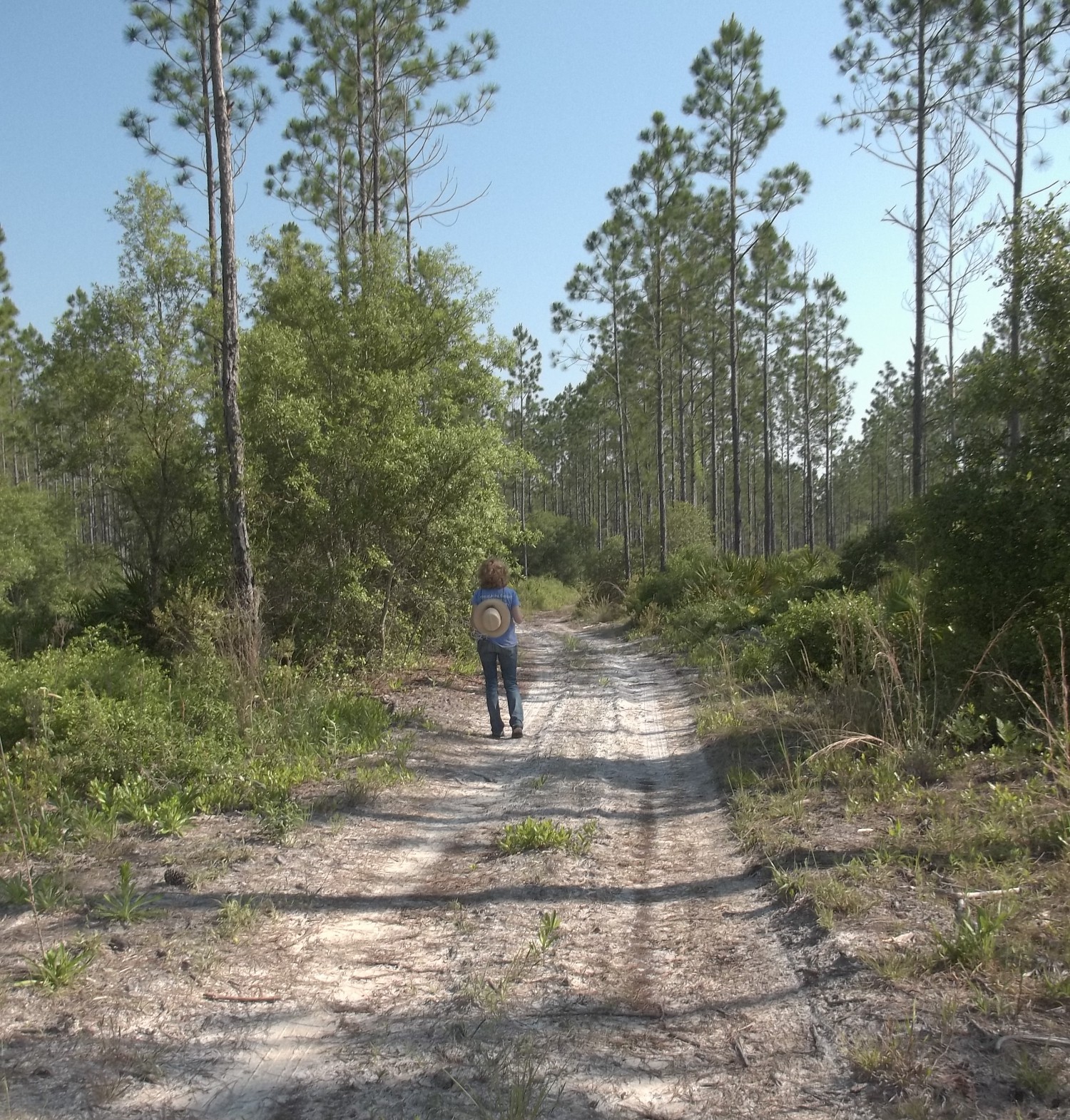
What are they thinking?

What are they thinking, we wonder. It’s a question we toss about in conversation. It frequently comes up with someone is doing something that seems self-destructive, or bizarre, or just unexpected.  For psychotherapists, like myself, a lot of people seem to believe we have a secret insight into what some particular person is thinking. Of course, I don’t. I have theories, sometimes, based on study and thirty-plus years of experience in mental health and sixty-plus years of experience being human, most of that as a voracious reader. But even with all that, I am often stymied and stumped as to what someone is thinking.

I recently dropped off art for a show and met another artist. We were introduced, we shook hands. He is a tall man with big, baseball mitt-sized hands. At least, compared to mine. And my small hands are twisted up and deformed with arthritis, with many joints completely failed, such that my ability to hold a brush or a pastel stick is pretty much a miracle. What was this man, a visual artist whose attention to detail is apparent in his work, thinking when he squeezed my hand as if I were a big man with whom he was about to enter an arm-wrestling contest? I don’t know, but what comes to mind is unkind. So, I try to assure myself it was a moment of oblivion.

We have many people in our neighborhood who walk their dogs and assiduously clean up after them. There is one person (I hope and pray it is only one because it is almost unbearable to think there are more) who very carefully picks up after their dog with proper little dark plastic bags, knots the bags carefully … and then leaves them behind. On the sidewalk, on someone’s driveway and once on the table at the end of our driveway where we had set out the abundant crop from our starfruit tree to give away. What was this person thinking as they left their little present next to the box of starfruit and the big sign announcing, Free Fruit? I hope I never figure it out. My husband, who is better-hearted person than I am, suggested that perhaps it was dark and they thought they were just adding to the trash pile. Hmmm.

What are they thinking when … we all wonder. And I am sure people wonder it about me. Certainly, my little adventures such as hiking up and down canyon walls and white-water rafting when I don’t even know how to swim generate some of that. Then there are the times when I nervously blurt out something stupid, awkward but well-intended when a friend shares difficult news, such as a scary health diagnosis. Being a professional is not a vaccine against that. And perhaps about you, too, sometimes, inspire people to wonder, what were they thinking? Reminding myself of this helps me give a little grace to other people’s weirdness or inconsideration, because I definitely have my moments of being weird, inconsiderate or just plain oblivious.  And at those times, no doubt someone is wondering, “My gosh, what is she thinking…?”

Quitter’s Day Part 3: Know Thyself

Micro? Macro? Or just bored?

Toe in the water, a cannonball dive, or just hanging out poolside?

Do you go for a haircut and, if it’s a new-to-you-stylist, ask for a half-inch trim so you can find out whether they actually listen and measure – or just grin and say, “Do whatever you want”? That’s your small vs big change preference in a nutshell. Then there’s never making any change that isn’t forced upon you by circumstances, like that little mishap when you to do layers like the stylist you follow on YouTube.

Because, if you’re a small-change person and you tried to take on too much in one step, you may become overwhelmed. Small-change people are often big-picture people: they see a small change (spend fifteen minutes a day learning a new language, for example), and immediately realize that fifteen minutes comes from … somewhere. And somewhere ought to be figured out so nothing important is accidentally left out. A small-change person will do better with a small and carefully planned step into change, and build from there.

But … if you’re a big-change person and you tried to make a small change, perhaps you got bored. It seemed hardly worthwhile. In that case, experiment with suiting your temperament.

Or maybe you just got discouraged because persistence with any change – big or small – can be difficult. Being persistent, sticking with the essentials, isn’t easy for most people. If it were, we wouldn’t marvel at the accomplishments of those who have developed outstanding skills in any particular domain. We know “outstanding” takes persistently showing up and doing the work.

Whatever the reason – too much, too little, just bored – maybe this week do a reboot that suits your temperament as an experiment, and see what happens.

Quitter’s Day Part 2

So … a week since the second Friday of January, what is sometimes called “Quitter’s Day,” for the frequent demise of New Year’s Resolutions. If you’ve given up, or fallen off track, every moment is potentially a new start.

Perhaps you need something a little more manageable: a small step instead of a massive change. Here’s a second suggestion, building on last week’s short post, for a small but potentially life-changing experiment. If you’re not already doing this, get outside in natural light early in the day – as soon after sunrise as you can manage, and, if it’s feasible, again at day’s end. Follow the sunset session with softer lighting indoors; night is not the time for blindingly bright lights. By getting early daylight, end-of-day light and softer, warmer indoor lighting, you will set your brain up for a more natural, sleep-friendly chemistry. With some sources citing 40% of adults having insomnia or other sleep problems, experimenting with the benefits of the right light at the right times could be well worth it!

Quitter’s Day – part 1

On New Year’s Day morning, Fr. Mike noted in his homily to those of us at early Mass that the second Friday in January is known as “Quitter’s Day,” because by then 80% of people would have quit their New Year’s Resolutions.

Perhaps you find yourself in the 80%. If so, may I suggest considering one or more short experiments – trying on a change, for a week or two – and assessing its usefulness for you. These are simple but not easy.

If making such changes were “easy,” we’d be a country overflowing with clear-thinking, peaceful, energetic, well-rested and generous-hearted people. Based on my 15-minute daily ration of news, that seems to not quite be the case.

Starting with the most basic – the marker of life at birth – breathing, which turns out to be something that we so easily can get wrong. If you are in good health and your medical provider doesn’t object, you might experiment with a practice of better breathing. This can be as simple as practicing slow, deep breathing for a few moments three times a day and then as needed when you want to calm yourself.  Breathe comfortably, slowly and deeply, so that the belly expands, rather than a quick, panting breath. Breathing out through the nose can help. “Slow” doesn’t mean make yourself dizzy or lightheaded; it means comfortable and relaxed. This kind of breathing impacts the nervous system in the abdomen and signals the brain to slow down its fight-or-flight, anxious mode.

It’s an experiment that you might try early in the morning, again when you shift gears between day and evening, and at bedtime.  You can find plenty of tutorials online with demos on relaxation breathing. If you have any medical conditions, of course, be sure that this is safe for you by consulting your healthcare provider.

Some people find this very useful as part of changing between activities, such as stopping work for lunch or at day’s end; before a stressful activity such as a presentation or dealing with a negative person; and when preparing for rest at night.

Thanks for reading!

In Autumn, the Truth is Revealed

In autumn, the truth comes out.

And by autumn, I mean any autumn. Autumn the meteorological season before winter; Autumn on the calendar; Autumn in our life span; and Autumn in the liturgical year.

In every case, if you step back far enough, you can see the patterns. The photo op brilliant foliage reveals what was there all along, shaped by experience.  In spite of the sometimes-brutal clarity of autumn, I love this time of year.

Deciduous trees that turn yellow, gold and orange in autumn are not so much changing color as revealing the color that has been resting underneath, hiding under the green of chlorophyll. As the days grow shorter and cooler, chlorophyll production decreases. The leaves have always been golden. The trees have experiences, and these matter, too. Perhaps there has been plenty of rain and the soil is rich, or perhaps a hurricane has blown off so many small branches that the tree suffers malnutrition from a lack of chlorophyll. Then, too, if it is the sort of tree that turns red, its intensity will be impacted by sugars manufactured and stored; more sweetness makes for a more brilliant red.

In October or November, looking back at the resolutions, motto, word or intentions for the new year, the truth is revealed. In March one might kick that can down the road; even in June there is still “plenty of time.” But in autumn, reality comes to visit. We either did, or did not, step up and out into the life we intended to try to make. The combination of who we are (like it or not) and the experiences thrown at us by life bring the outcome we assess in the autumnal review of our intentions for the year. I’ve had the same motto for years now because apparently I’m a slow learner.

In the mirror, in the season of life poets call autumn, we see the person we have been all along, plus our experiences. The smoothness and sameness of youth is gone for those in midlife and later; laughter and tears, pain and care, habits – good and bad – all are revealed. A twenty-five-year-old might hide bad habits, but by forty-five, the entire body shows the pattern and at sixty-five, odds are the mind and spirit are far from what they promised to become before a bad habit became an addiction. On the other hand, there can be an explosion of energy, creativity and spiritual growth at in the autumn of life that startles those who mistook the responsible behaviors of younger years for that person being “boring.” This is when adult children wonder if their parents have gone a bit crazy – taking up new hobbies, traveling, refusing to be properly “old.” No, they were never actually boring, just busy with lifegiving, the drive that Erikson called “generativity,” that leads people to make sacrifices for others, and trees to manufacture food out of sunlight to nourish themselves and the seeds for future trees.

And then the liturgical year winds around, ending about four weeks before Christmas, with the Scripture readings for the last few weeks focused more and more on the last things – our own death, the final judgment, the need to take account of how we are living and make changes in accord with the highest good.  How appropriate that this unveiling of the reality beneath happens in such a pervasive way – that we are offered the chance see ourselves, our year, our years in total, through the same golden lens.

Happy mid-autumn; wishing you all the golden light the season offers.

Believe that there is more to you

It is a sad and common theme.

A person is struggling: with an addiction, or obsessions and compulsions, or moral injury, or the impact of trauma, and has come to a place where the sense of self has been entirely subsumed by the problem and its pain.

The definition of self becomes “the addiction,” or “the monster who did (whatever has led to moral injury)” or “the mental disorder diagnosis.”

And, of course, as a therapist, I believe it is critical to address mental health troubles with the best of the science we have, with the particular approaches suited, as discerned ongoing, with the specific needs of that client.

But I also believe that a parallel need is extant and urgent: the need for this person, who is suffering, to come back to an awareness of self as a deeply beloved child of God. Not generically loved, like we may say that we “love” some food or activity or type of animal – but particular, personal, and intense.  Women who, like me, have been blessed to give birth will recall that wild wave of emotion that engulfs us when we meet that little person face-to-face after the peculiar intimacy of pregnancy. It makes us irrationally jealous of everyone and anyone; what mother doesn’t remember resenting the nurses and physicians who separated us from the baby long enough to do the general assessments and necessary care? Well, that is a reflection God’s love for each person.

If a person who is suffering is willing to enter into, and do, the hard work of therapy, which will include lifestyle changes and “homework,” and also becomes open to reconsidering his or her existence as a deeply loved person, someone who is more than the addiction, or bad choices, or terrifying memories, or intrusive thoughts and painful compulsions, then true and deep healing can happen.  This is what I would wish for every person struggling with emotional wounds.

My Grief Support Group

On October 1, the next offering of GriefShare will begin at St. Matthew Catholic Church. This marks my 15th round of GriefShare at St. Matthew’s, on top of a long history of grief support volunteerism prior to starting at St. Matthew in 2018. GriefShare at St. Matthew’s is free, although we do ask for a donation to cover the cost of the workbook provided to each participant.

GriefShare is a 13-week program, but with the breaks for Thanksgiving and Christmas, this offering will wrap up in late January, which I find useful – we surround the difficult weeks of the holidays but are well into the program, and, we hope, some extra support and encouragement for grief during especially challenging periods.

The last session began in February and ran through May – a difficult one for me, as my father passed in January 2025, the day before the October 2024-January 2025 GriefShare program ended. I was more than a little raw and definitely not my best self for the participants this past spring. I apologized along the way but it doesn’t make up for the fact that I was not on my A-game for people who needed me. I hope to do better this time around.

Generally, the guidance for grief support groups is to wait three months. For some people, it takes longer. Some people jump in sooner simply because waiting until another group starts seems too long. Every person is unique and so is their grief, the person they are grieving, and their history of losses, and these factors impact how we each grieve. Some people come to grief counseling years after the loss, when the demands of the aftermath of loss have slowed down. There is no timeline on grief.

GriefShare programs have a standard format: some check-in and chat time; a 30-minute video that addresses a particular aspect of the grief experience; and discussion time on that topic. The aforementioned workbook is for personal use between sessions, with daily readings and activities focused on each week’s topic. Speaking in the group is entirely optional – no one should feel pressured to speak. If you come and are unable to speak, please do not feel badly; your presence is important and valuable even if you don’t say a word. Simply by being present to one another, we give witness and support to the fact that we do, in fact, grieve the people we love. It doesn’t go away just because the world seems to have moved on.

GriefShare is a Christian program – there are references to scripture throughout – but all are welcome. For our Jewish brothers and sisters, most of the Scripture is drawn from Hebrew Scriptures. Not surprising, Job and the Psalms are probably most referenced!

To find a GriefShare group near you, go to www.griefshare.org and search by your zip code.

Please share this information with anyone you know who might need it. Even better – offer to go a time or two with a grieving friend who needs the support and encouragement to take that first, scary step to go to a group. It will be a couple of hours of pure, loving gift to someone who needs it.

Riding the Rapids

We recently spent a few days hiking up mountains, camping and white-water rafting in Wyoming and Montana, because isn’t that what people who are afraid of heights (me) and can’t swim (yeah, me, again) do for fun? And it was fun. It’s good to push out of the comfort zone.

Most parents and the other adults who care for and work with children are quite serious about helping them get out of their supposed comfort zones and into a healthier lifestyle. Recently, I was speaking to a group of adults about the topic, “Raising Mentally Healthy Children.” We spent our time focused on what we can do.

One problem that arises in these conversations – whether in a group, one-on-one, or with a family, is that making time for change seems impossible. The days are packed, and nothing on the schedule seems negotiable. Yet, in reality, what’s not negotiable is what humans need to be healthy and thriving.

What most kids need, and what we need, too, is more appropriately divvied-up time. For example, children and teens benefit from a solid two hours or more of physical activity every day. They need time outdoors, in nature, for their immune systems, Vitamin D, circadian rhythms and even their eyesight development. The near-and-far variation in focus that being outdoors elicits promotes healthy eyesight in young children; kids are supposed to go from crouching down to study a beetle to peering across the field to see if that’s a hawk in the tree and then taking off running to make sure. Optimally, they’re outside for at least two or so hours every day – more on weekends.

Kids need enough sleep – probably 9 or 10 hours a night, with an absence of screens. Recent research links high levels of artificial light at night (ALAN) with increased rates of cancer due to disruption of the circadian rhythm. An immediate risk with insufficient sleep is the attention system. Sleep-deprived people are irritable, inattentive, forgetful, disorganized and generally not fun to be around. Sleep-deprived drivers test as impaired, much like those with alcohol and/or drugs in their system. Think about inexperienced and sleep-deprived teenagers driving to and from school and work, often in the dark.

Kids, and we adults, need unstructured time. Most of the adults present had a creative hobby or two, and we all agreed that it takes time to shift gears into that hobby. It’s hard to walk in the door after work and immediately pick up a paintbrush, or guitar, or journal, or woodworking tools, and be in flow. The segue into creativity requires a sort of almost boring downtime – something many adults and children avoid compulsively through electronics. 

I can’t tell people what sacrifices have to be made for their family to have a healthier life. It varies from family to family, and it is never easy. It might be simple or quite complex, but it is never easy. However – after the white-water part, when you aren’t on nature’s roller coaster, there are always some smooth, easy times ahead. Thank you to all the parents who go for it – who strive to be sure their children to have the range of experiences they need to grow up resilient, curious and confident.

Ouch! Hey! and, Yay!

It can be hard for parents to make the changes they see would be best for their families. Every good idea seems like a Sisyphean struggle.

Sometimes it’s useful to start very small. Let’s begin with a short, very simplified review of behavior modification from Psych 101. We’ve got positive reinforcement (YAY), negative reinforcement (also YAY) and punishment by application – life does something to you (OUCH), or withdrawal, when life takes something away (HEY!).

Let’s say it is noonish on a pleasant day, I have a break, and decide to take a walk outside. I will enjoy the breeze, the birds singing, a chance to move and clear my head. I will come back to the desk feeling invigorated. I have been positively reinforced. I did an action, or stopped an action, that resulted in something good (my uplifted mood).

A few hours later, it will be about 3 PM and I may have the beginning of a headache. I glance at my water bottle and realize I am way behind on fluids, so I drink a few glugs of water. In short order, the headache dissipates. I have been negatively reinforced: I did a desirable action, and something bad went away.

Punishment, on the other hand, is entirely different. If, feeling a bit bored, I decide to scroll through the news of the day, I might feel depressed and then realize I have wasted my break reading bad news (HEY!).  Or, I may notice the beginnings of a headache and, instead of a drink of water, start with a few chunks of delicious, smooth dark chocolate and then (OUCH) my headache may well get worse.

The point of this little meander through intro psych lessons is that, when making changes, maybe it will progress better if you find ways to start with positive and negative reinforcement rather than what will seem like punishments.

For example, let’s say you think that at least one weekend afternoon of family time without devices would be a good start. Teens and even younger children may not agree. Wrestling their phones and tablets away is feasible, but they will consider this HEY!, and their resulting dopamine withdrawal symptoms to be OUCH for them; their miserable behavior may be a big OUCH for you.  But if a family activity inherently means no devices and then everyone has fun, we now have a big YAY in place the OUCH and HEY! What might that include?

Being outdoors in nature, where devices may not work properly anyway. A movie outing. A museum that requires devices be silent and away. Physical activities. Someplace where there is no phone or internet signal. Or just take a deep breath and impose device-off mode around a slice of a day and spend it in actively doing things that would not be improved by device distractions. Have fun. Don’t lecture about how fun it was (that’s an OUCH). If your kid mentions it was pretty fun, you can agree and take that as YAY – an invitation to repeat as possible.

Hard Changes

Most of us have some changes to make. And most changes are not so easy. That’s why people postpone them, or poke at the edges, or just pretend the problem will go away by itself. Sometimes people convince themselves there isn’t even a problem, really; that it just depends how you look at it. Maybe so. But maybe there’s something that needs changing.

Let’s say you have a teenage child, or a child approaching the teens. S/he is cranky, sullen, uncooperative with chores, sulks during family meals and resists being on time for school and other appointments. S/he wants to spend time alone, in the bedroom, with electronics. The child is depressed and/or anxious and/or obsessive and/or perpetually angry. You know the situation will change, one way or the other. Everything changes. If you do nothing, you are gambling that your child will continue down this road and somehow, at 18 or 19 or 20, wake up, shake themselves off like a wet Golden Retriever and come out of their bedroom, smile and say, “Wow! How could I have been so wrong?!”

Yeah, I doubt it, too.

If you have this situation and need to take it on, it can be hard to know where to start. Here’s a suggestion: if the situation is not a crisis, then the most practical first step may be to start with yourself.

You will have to change. Perhaps you have to start the change process by being sure that all the adults in the house are on the same page in your expectations. Perhaps you need to get yourself on the right path.

You go first. You get enough fresh air, and time in nature, and sleep, and healthy nutrition, and balanced physical activity. You strive to do interesting and challenging things in what little free time you have. You will, quite naturally and incidentally, spend less passive screen time. You’ll be leading from strength rather than being a target for adolescents’ favorite criticism: that we adults are hypocrites. You’ll be in a much better stance to steer positive changes for your tween or teen.